Review Article
클린라벨 소재 및 가공기술 개발을 위한 연구 동향과 IP-R&D 전략
박민경1
,
성정민1,
강민철1,
김범근1,
전준영1,
김태경1,
오선민1,
이선민1,
최윤상1,*
Research trends and IP-R&D strategies for the development of clean label materials and processing technologies
Min Kyung Park1,
Jung-Min Sung1,
Min Cheoul Kang1,
Bum-Keun Kim1,
Joon-Young Jun1,
Tae-Kyung Kim1,
Seon-Min Oh1,
Seonmin Lee1,
Yun-Sang Choi1,*
Author Information & Copyright ▼
1Research Group of Food Processing, Korea Food Research Institute, Wanju 55365, Korea
*Corresponding author : Yun-Sang Choi. Research Group of Food Processing, Korea Food Research Institute, Wanju 55365, Korea. Tel: +82-63-219-9387, Fax: +82-63-219-9076, E-mail:
kcys0517@kfri.re.kr
© Copyright 2025 Korean Society for Food Science of Animal Resources. This is an Open-Access article distributed under the terms of the
Creative Commons Attribution Non-Commercial License (http://creativecommons.org/licenses/by-nc/4.0/) which permits
unrestricted non-commercial use, distribution, and reproduction in any
medium, provided the original work is properly cited.
Received: Aug 23, 2025; Revised: Sep 22, 2025; Accepted: Sep 23, 2025
Published Online: Nov 30, 2025
Abstract
Growing consumer awareness of health and safety has accelerated demand for clean label foods characterized by minimal use of synthetic additives. Despite the absence of a globally unified definition or certification system, the clean label market is expanding rapidly and is projected to reach approximately USD 90.5 billion by 2032. This study highlights recent advances in three major research areas of clean label food processing technologies: (i) development of natural preservative materials, (ii) alternative technologies to synthetic nitrites, and (iii) natural seasonings and flavoring agents. Patent analysis further revealed emerging trends such as the use of composite materials to enhance antimicrobial activity, glycation of myofibrillar proteins, plasma-based processing, enzyme-assisted pretreatment, and encapsulation/coating techniques. In addition, current domestic and international regulatory frameworks and intellectual property-R&D strategies are discussed to identify pathways for commercialization and to strengthen global competitiveness. This study is expected to provide a foundation for the Korean food industry to strategically respond to the rapidly evolving clean label market.
Keywords: clean label; natural additives; processing technology; antimicrobial preservatives; nitrite replacement; IP-R&D strategies
서 론
현대 식품산업은 소비자의 건강, 안전, 그리고 투명성에 대한 사회적 요구가 점차 증대됨에 따라 새로운 전환점을 맞이하고 있다(Lee, 2021). 과거 식품 구매의 주요 기준이 가격과 기호성에 집중되었다면, 최근에는 원재료의 출처, 첨가물의 종류, 제조 과정의 투명성 등이 소비자 선택을 좌우하는 핵심 요인으로 부상하였다(Cao and Miao, 2023). 특히 합성첨가물에 대한 사회적 우려가 확대되면서 이를 최소화하거나 배제한 식품, 이른바 ‘클린라벨(clean label)’ 식품이 글로벌 시장에서 빠르게 성장하고 있다(Alexandri et al., 2022; Delgado-Pando et al., 2021). 클린라벨은 단순히 무첨가라는 개념을 넘어서 소비자가 직관적으로 이해할 수 있는 원재료 사용, 가공 최소화, 투명한 라벨링(labeling)을 포함하는 포괄적 개념이다(Maruyama et al., 2021). 그러나 아직 국제적으로 합의된 정의나 법적 규제가 마련되지 않았으며, 국가 및 지역별로 상이한 기준이 적용되고 있어 산업계와 소비자 모두에게 혼란을 야기하고 있다(Park et al., 2023). 미국과 유럽에서는 식품 라벨링 가이드라인 개정을 통해 클린라벨 제품의 시장 진입을 장려하고 있으며, 글로벌 식품기업들이 선제적으로 무첨가 및 천연소재 기반 제품을 확대하고 있다(Park et al., 2024b). 반면 한국을 비롯한 아시아 국가들은 제도적 기반이 부족하여 소비자 주도의 수요 증가에 대응하는 수준에 머물러 있다. 글로벌 클린라벨 식품 시장은 매년 증가되거나 확대될 것으로 예측되고 있으며, 이러한 성장은 단순한 소비 트렌드를 넘어 식품 제조업체들의 연구개발(R&D) 방향 전환과 지식재산권(intellectual property, IP) 확보 경쟁을 촉진하고 있다. 특히 합성 보존료, 발색제, 향미 증진제 등을 대체할 수 있는 천연소재 개발이 활발히 진행되면서, 특허 출원 건수 역시 꾸준히 증가하고 있다.
본 연구에서는 클린라벨 연구분야를 크게 세 가지 분야로 구분하여 연구하고자 하였다. 먼저, 천연 보존료 소재 개발로서 합성 소브산 및 벤조산을 대체하기 위해 식물 추출물, 미생물 대사산물, 천연 유래 항균 성분이 활용되고 있다(Park et al., 2024a). 또한, 합성 아질산염 대체 기술로는 육가공품 저장성과 발색을 담당하는 아질산염의 니트로소아민 형성 문제를 해결하기 위해 근장단백질 당화, 미생물 환원, 플라즈마 처리 등의 신기술이 연구되고 있다(Jo et al., 2020; Jung et al., 2017; Kim et al., 2017a; Kim et al., 2025a). 마지막으로 천연 조미료 및 향미 소재 개발로 합성 monosodium glutamate(MSG)에 대한 소비자의 거부감을 극복하기 위해 대두 발효 조미료, 효소 가수분해 단백질, 복합 발효 향미소재 등에 대한 연구를 분석하였다. 이러한 연구는 단순한 소재 발굴에 그치지 않고, 특허 분석을 통한 IP 기반 전략이 요구된다.
따라서 본 연구에서는 클린라벨 가공기술 개발의 주요 연구 분야인 천연 보존료, 합성 아질산염 대체, 천연 조미료 및 향미 소재의 최신 연구 동향을 고찰하고, 특허 분석을 통해 도출된 IP-R&D 전략을 제시하고자 한다. 또한 국내외 시장 및 제도 동향을 종합적으로 검토함으로써한국 식품산업이 글로벌 클린라벨 시장에서 경쟁력을 확보하기 위한 발전 방향을 논의하고자 한다.
클린라벨의 정의와 글로벌 동향
클린라벨(clean label)이라는 용어는 학술적 또는 법적 정의가 아직 정형화되어 있지 않다. 일반적으로 클린라벨은 합성첨가물 미사용, 소비자가 이해할 수 있는 원재료 표시, 최소 가공 과정 적용을 핵심 요소로 간주한다(Asioli et al., 2017). 그러나 국가별, 지역별, 소비자 집단별 해석이 상이하여 제도적 혼란을 야기할 수 있다(Table 1). 미국 시장에서는 ‘no artificial, no preservatives, Simple ingredients’와 같이 제품 포지셔닝을 중심으로 정의하는 반면, 유럽은 food information regulation(FIR)을 근거로 원재료와 첨가물 정보를 직관적으로 확인할 수 있는 라벨링을 강조한다(Fransvea et al., 2014). 일본에서는 ‘무첨가’, ‘천연 유래’ 등의 표현이 주로 사용되지만 국제적 표준은 부재하다. 국내에서는 일부 식품표시기준에서 무첨가라는 용어 사용이 제한되므로, ‘무합성 첨가물’, ‘천연 원료 사용’, ‘그린푸드 인증’ 등의 대체 문구가 사용되고 있다. 이러한 제도적 공백은 소비자 혼란뿐만 아니라 기업의 글로벌 진출 시 규제 대응 난이도를 높이는 요인이 되고 있다. 클린라벨 식품 시장은 2010년대 중반 이후 건강 지향적 소비 트렌드와 맞물리며 급격히 성장하였다. 글로벌 시장 조사에 따르면, 2024년 클린라벨 식품 시장 규모는 약 536억 7천만 달러로 추정되며, 연평균 성장률(CAGR) 6.75%를 기록하여 2032년에는 약 905억 달러에 도달할 것으로 전망된다(Gusain, 2024). 북미와 유럽은 시장 성장의 중심지로, 미국의 General Mills, Kellogg’s, Nestlé 등 대형 식품기업은 합성첨가물 제거 제품을 대거 출시하여 소비자 기반을 확대하고 있다(Baek, 2016). 유럽에서는 프랑스, 독일, 영국 등에서 무첨가 제품 수요가 폭발적으로 증가하였고, EU의 식품정보 규정 개정을 통해 라벨링 제도가 보완되고 있다. 아시아 지역은 도입이 다소 늦었으나, 최근 중국과 한국에서 소비자의 인식 변화가 가속화되고 있다. 중국 대도시에서는 ‘무첨가’ 제품이 고급 식품 카테고리로 자리 잡았으며, 한국에서는 CJ제일제당, 풀무원, 오리온 등 대기업을 중심으로 무첨가 간편식, 클린라벨 간식류, 가공식품 출시가 활발히 이루어지고 있다.
Table 1.
Global comparison of clean label definitions, regulations, and market characteristics
| Category |
USA |
EU |
Japan |
Korea |
| Definition / concept |
No legal definition. Generally understood as No artificial, No preservatives, and Simple ingredients |
No legal definition. Based on the Food Information Regulation (FIR), emphasizing intuitive labeling |
No legal definition. Market centered on “No additives” and “naturally derived” concepts |
No legal definition. The term “No additives” is conditionally permitted under the Food Labeling Standards |
| Regulation / policy |
CFR Title 21 and A Food Labeling Guide revisions encourage clear indication of artificial colors, sweeteners, and preservatives |
FIR revision strengthens labeling of ingredient origins and additive use; initiative to reduce E-numbers |
Guidelines for “No additive” labeling in operation; certification mainly for traditional fermented foods |
Introduction of “Green Food Certification” (low-impact, eco-friendly standards) and “Smart Food QR” system |
| Market characteristics |
Led by major corporations such as General Mills, Kellogg’s, and Nestlé; large-scale clean label product lines launched |
Demand for additive-free and natural ingredient products growing rapidly, especially in France, Germany, and the UK |
Expansion of additive-free products based on fermented foods (soy sauce, miso, etc.) |
Early-stage market led by large companies such as CJ CheilJedang, Pulmuone, and Orion |
| Consumer perception |
Preference for “simple ingredient labels”; emphasis on safety and health image |
Strong demand for clear ingredient information; strong aversion to E-numbers |
“No additives” associated with health and premium quality |
Increasing interest in ingredient transparency; preference for additive-free ready meals and snacks, expanding among MZ generation |
| Limitations / challenges |
Lack of legal definition → reliance on company-driven marketing |
Inconsistent regulations among member states; need for EU-wide harmonization |
Insufficient international standardization → trade barriers in export markets |
Ambiguity in the regulation of “No additives” terminology; limited response to global certification standards |
| Future tasks |
Need to establish legal framework beyond voluntary standards |
Establishment of unified international standards (linked to CODEX) |
Regulatory alignment for global market competitiveness |
Integration with international standards, IP-based technology development, and institutional framework establishment |
Download Excel Table
소비자 연구에 따르면 제품 구매 시 성분표시를 확인하며, 합성첨가물 유무가 구매 결정에 중요한 영향을 미치는 것으로 나타났다. 특히 디지털 환경에 익숙하고 개인의 행복과 이색적인 경험을 중시하며, SNS를 기반으로 강력한 소비 영향력을 보이는 MZ세대는 원재료의 투명성뿐 아니라 지속가능성, 환경 친화성까지 고려하여 구매 결정을 내리는 경향이 강한 것으로 나타났다(Asioli et al., 2017). 클린라벨 식품 선호는 단순히 첨가물 부재를 의미하는 안전성 인식을 넘어, ‘자연스럽고 건강하다’는 상징적 가치와 연결되며, 브랜드 신뢰와 소비자 정체성을 강화하는 핵심 요인으로 작용하고 있다. 미국 식품의약국(Food and Drug Administration, FDA)은 ‘Code of Federal Regulations Title 21’ 및 ‘A Food Labeling Guide’를 개정하여 2020년 이후 모든 영양성분표 라벨 규정을 강화하였다. 이에 따라 합성 색소, 인공 감미료, 합성 보존료를 사용하지 않은 제품의 라벨링을 명확히 표시하도록 권장하고 있다(FDA, 2021). EU는 FIR을 지속적으로 개정하며, 원재료 출처와 첨가물 사용 여부를 소비자가 쉽게 확인할 수 있도록 하고 있다. 일본은 ‘무첨가’ 표시에 대한 제도적 기준을 마련하고 있으며, 전통 발효식품을 기반으로 한 클린라벨 제품군이 빠르게 성장하고 있으나 국제적 표준화는 미흡하다. 국내에서는 식품위생법상 ‘무첨가’ 표기가 제한되는 경우가 많아 ‘무합성첨가물’, ‘천연원료 사용’ 등의 대체 표현이 활용되며, ‘그린푸드 인증’과 ‘스마트푸드 QR’ 등 제도를 통해 소비자 신뢰와 알권리 확보를 추진하고 있다(Park et al., 2023).
그러므로 클린라벨 식품은 단순한 첨가물 부재를 넘어, 소비자 신뢰 구축, 브랜드 가치 제고, 지속가능한 식품산업 전환을 상징하는 다차원적 개념이다. 그러나 국가별 정의와 규제가 상이하여, 국제적 통일 기준 부재는 여전히 시장 성장의 한계로 작용한다. 향후 클린라벨 연구와 제도화는 국제표준(CODEX 등)과 연계하여 글로벌 무역 장벽을 해소하는 방향으로 발전이 가능할 것으로 사료된다. 또한 후발 시장인 한국은 소비자 수요에 맞는 제도적 기반 마련과 지식재산권(IP) 기반 기술개발 전략을 통해 글로벌 경쟁력을 확보해야 한다. 본 연구에서는 Table 2와 같이 클린라벨 가공기술의 분류로 나누어서 천연 보존료 소재 개발, 합성아질산염 대체기술 개발 및 천연 조미료 소재 개발과 관련된 특허 등을 분석하고자 소분류로 분류하여 유효특허 분석을 진행하였다.
Table 2.
Results of the overall contract patent processing related to clean label technology
| Main category |
Subcategory |
Detailed classification |
Valid patents (non-duplicate) |
| Korea |
USA |
Japan |
EU |
China |
PCT |
Sum |
| Development of Clean-Label Processing Technologies Using Natural Additives |
Development of Natural Preservative Materials |
Enhancement of Antimicrobial Efficiency |
90 |
11 |
13 |
7 |
- |
10 |
131 |
| Improvement of Processing Suitability |
6 |
2 |
4 |
- |
- |
- |
12 |
| Antimicrobial Spectrum |
11 |
2 |
- |
- |
- |
- |
13 |
| Others |
- |
- |
- |
- |
- |
- |
- |
| Subtotal |
107 |
15 |
17 |
7 |
- |
10 |
156 |
| Development of Alternative Technologies for Synthetic Nitrite |
Natural Nitrite Reduction Using Microorganisms |
43 |
18 |
11 |
10 |
47 |
11 |
140 |
| Utilization of Glycosylated Myofibrillar Proteins |
- |
- |
- |
- |
5 |
- |
5 |
| Application of Plasma Technology |
6 |
2 |
- |
- |
2 |
3 |
13 |
| Others |
4 |
12 |
9 |
3 |
11 |
6 |
45 |
| Subtotal |
53 |
32 |
20 |
13 |
65 |
20 |
203 |
| Development of Natural Seasoning Materials |
Enzyme Treatment Technology |
13 |
5 |
15 |
3 |
19 |
8 |
63 |
| Capsule / Coating Technology |
16 |
44 |
21 |
30 |
31 |
28 |
170 |
| Others |
- |
- |
- |
- |
- |
- |
- |
| Subtotal |
29 |
49 |
36 |
33 |
50 |
36 |
233 |
| Total |
189 |
96 |
73 |
53 |
115 |
66 |
592 |
Download Excel Table
천연 보존료 소재 개발 동향
식품첨가물은 식품을 제조, 가공, 조리 보존할 때 맛, 향, 외관, 저장성, 영양 등을 향상시키기 위한 목적으로 사용되는 물질을 말하며, 국내에서는 Table 3과 같이 용도별로 분류하고 있다. 식품산업에서 보존료는 미생물의 증식을 억제하여 저장성과 안전성을 보장하는 핵심적 기능을 수행한다(Awuchi et al., 2020). 그러나 최근 합성 보존료 사용에 대한 두 가지 주요 문제점이 대두되고 있다(Table 4). 우선, 소비자 인식의 변화로서 합성 보존료가 직접적으로 인체에 독성을 유발한다는 과학적 근거는 제한적임에도 불구하고, 화학적 첨가물은 인체에 위해성이 있다라는 인식이 소비자들 사이에 확산되면서 구매 거부 요인으로 작용하고 있다(Shim et al., 2011). 소브산(sorbic acid), 벤조산(benzoic acid), 파라옥시안식향산 에스테르류(parabens)가 generally recognized as safe로 설정되어 있는 합성 보존료로서 안정성과 경제성 및 다양한 미생물에 대한 항균 효과로 인해 오랫동안 식품가공 현장에서 널리 사용되고 있다(Davidson et al., 2005).
Table 3.
Food additive classification system
| No |
Use |
Definition |
| 1 |
Sweetener |
Provides sweetness to food. |
| 2 |
Anticaking agent |
Prevents or reduces particles in food from adhering or forming lumps. |
| 3 |
Antifoaming agent |
Prevents or reduces the formation of foam in food. |
| 4 |
Gum base |
A non-nutritive chewing substance with appropriate viscosity and elasticity. |
| 5 |
Flour treatment agent |
Added to flour or dough to improve baking quality or color. |
| 6 |
Color fixative (color developer) |
Stabilizes, maintains, or enhances the color of food. |
| 7 |
Preservative |
Prevents quality deterioration caused by microorganisms and extends shelf life. |
| 8 |
Propellant |
Gas used to expel food from its container. |
| 9 |
Acidity regulator |
Controls the acidity or alkalinity of food. |
| 10 |
Antioxidant |
Prevents quality deterioration of food due to oxidation. |
| 11 |
Sterilizing agent |
Rapidly kills microorganisms on the surface of food. |
| 12 |
Humectant |
Prevents food from drying out. |
| 13 |
Stabilizer |
Maintains a uniform dispersion of two or more components. |
| 14 |
Filtration aid |
Removes impurities or fine particles by adsorption. |
| 15 |
Nutrient fortifier |
Maintains nutritional quality, restores lost nutrients, or enhances nutrition. |
| 16 |
Emulsifier |
Mixes two or more immiscible phases uniformly. |
| 17 |
Release agent (antisticking agent) |
Prevents raw materials from adhering to containers to maintain food shape. |
| 18 |
Coagulant |
Binds or coagulates food components, maintains the texture of fruits and vegetables. |
| 19 |
Processing aid |
Used in food processing as catalysts, precipitants, clarifiers, or decomposers. |
| 20 |
Gelling agent |
Forms gels to impart texture or structure to food. |
| 21 |
Thickener |
Increases the viscosity of food. |
| 22 |
Coloring agent |
Imparts or restores color to food. |
| 23 |
Extraction solvent |
Used to extract or dissolve useful substances. |
| 24 |
Filling gas |
Gas injected into packaging containers to protect food. |
| 25 |
Leavening agent |
Releases gas to increase the volume of dough. |
| 26 |
Bleaching agent |
Removes or lightens color in food. |
| 27 |
Surface finishing agent |
Smooths or refines the surface of food. |
| 28 |
Coating agent (glazing agent) |
Adds gloss or forms a protective film on the surface of food. |
| 29 |
Flavoring agent |
Provides characteristic aroma or restores original flavor lost during processing. |
| 30 |
Flavor enhancer |
Enhances or intensifies the taste or flavor of food. |
| 31 |
Enzyme preparation |
Induces or catalyzes specific biochemical reactions. |
Download Excel Table
Table 4.
Food preservative classification
| Category (47 types in total) |
| Listed in Korean food code (28 types) |
Not listed in Korean food code (11 types) |
Other natural ingredients (8 types) |
| ε-Polylysine |
Calcium sorbate |
Calcium acetate |
Citrus extract |
Licorice extract |
| Natamycin |
Sodium nitrite |
Methyl p-Hydroxybenzoate |
Mustard extract |
Lysozyme |
| Nisin |
Sodium sulfite |
Ethyl p-Hydroxybenzoate |
Aqueous chili pepper extract |
Modified hop extract |
| Sodium dehydroacetate |
Benzoic acid |
Propionic acid |
Green tea extract |
Vitamin C |
| Sodium metabisulfite |
Sodium benzoate |
Sodium propionate |
Rosemary extract |
Yucca extract |
| Anhydrous sodium sulfite |
Potassium benzoate |
Calcium propionate |
Phyllostachys pubescens (moso bamboo) extract |
Irridin protein |
| Anhydrous sulfurous acid |
Calcium benzoate |
|
Radish extract |
Chitosan |
| Glacial acetic acid |
Grapefruit seed extract |
|
Complex Scutellaria baicalensis (baikal skullcap) extract |
Grape seed extract |
| Acidic sodium sulfite |
Sodium nitrate |
|
Cabbage extract |
|
| Sorbic acid |
Potassium nitrate |
|
Olive leaf extract |
|
| Potassium sorbate |
Sodium thiosulfate |
|
Hinokitiol |
|
Download Excel Table
둘째는 안전성 논란으로 벤조산은 특정 조건에서 벤젠으로 전환될 수 있다는 가능성이 보고되었으며, 파라벤류의 경우 내분비계 교란물질(endocrine disruptor)로서의 잠재적 위험성이 지적된 바 있다(Jung et al., 2022). 비록 이러한 위험이 실제 위해 수준에 도달하지 않는다고 하더라도, 소비자 불안은 곧 시장 요구로 연결되며 이는 대체 기술 개발의 필요성을 가속화시키고 있다. 이러한 배경에서 합성 보존료를 대체할 수 있는 천연 소재 기반 보존기술 개발은 식품안전 확보와 동시에 소비자 신뢰를 충족시킬 수 있는 필연적 연구 과제로 자리 잡고 있다.
천연 항균소재로서 천연 보존기술 연구는 식물 유래, 미생물 유래 및 복합소재 활용으로 구분할 수 있다. 다양한 식물 추출물이 항균 및 보존 효과를 나타내는 것으로 보고되고 있다. 자몽종자 추출물은 플라보노이드와 테르페노이드를 주요 성분으로 하여 대장균 및 황색포도상구균에 대한 항균 활성을 나타낸다(Cvetnic and Vladimir-Knezevic, 2004). 녹차 추출물의 카테킨류는 뛰어난 항산화 및 항균 활성을 지니며 음료, 제과류 등에 응용 가능하다(Friedman, 2007). 또한 로즈마리 추출물은 카르노솔(carnosol), 로즈마릭산(rosemarinic acid) 등의 페놀류를 함유하여 항산화 및 항균 활성을 발휘하며, 특히 육류 저장성 개선에 효과적인 것으로 보고되었다(de Oliveira et al., 2017). 고추 및 겨자 추출물 또한 캡사이신(capsaicin), 아이소싸이오사이안산염(isothiocyanate)을 통해 항균작용을 나타낸다(Cotter et al., 2013). 이러한 식물 추출물은 단독 사용 시 항균 스펙트럼이 제한적일 수 있으나, 혼합 사용 시 시너지 효과를 기대할 수 있다. 실제 최근 특허 출원에서는 복합소재의 항균효과 증진을 목적으로 한 연구가 증가하고 있다.
미생물이 생성하는 대사산물 또한 천연 보존제로 주목받고 있다. 대표적으로 박테리오신(bacteriocin)은 Lactobacillus, Pediococcus 등이 생산하는 단백질성 항균물질로서 리스테리아균을 포함한 다양한 식중독균 억제에 효과적이다(Adams and Nicolaides, 1997). 젖산 및 아세트산과 같은 유기산은 pH 저하를 통해 항균 효과를 나타내며 발효식품에서 자연적으로 발견된다(Adams and Nicolaides, 1997). 리소자임(lysozyme)과 같은 효소는 세포벽 분해를 통해 세균 사멸에 기여하며, 치즈, 맥주 등의 저장 안정성을 향상시킨다(Proctor et al., 1988). 이러한 미생물 유래 소재는 전통 발효식품과의 연계성이 높아 소비자 수용도가 크다는 장점이 있다. 천연 보존소재의 한계는 단일 성분의 항균 스펙트럼 제한과 저농도 적용 시 효능 부족에 있다. 이를 극복하기 위해 복합소재 및 새로운 공정기술과의 융합 연구가 시도되고 있다. 허브 추출물과 유기산의 복합 처리, 플라즈마 공정과 천연 추출물의 병용, 나노에멀전 및 캡슐화 기술을 통한 안정성 및 방출 조절 등이 대표적 사례이다(McClements, 2011; Misra et al., 2014). 이러한 접근은 합성 보존료 대체를 넘어, 기능적으로 동등하거나 우수한 효과를 기대할 수 있는 방향성을 제시한다.
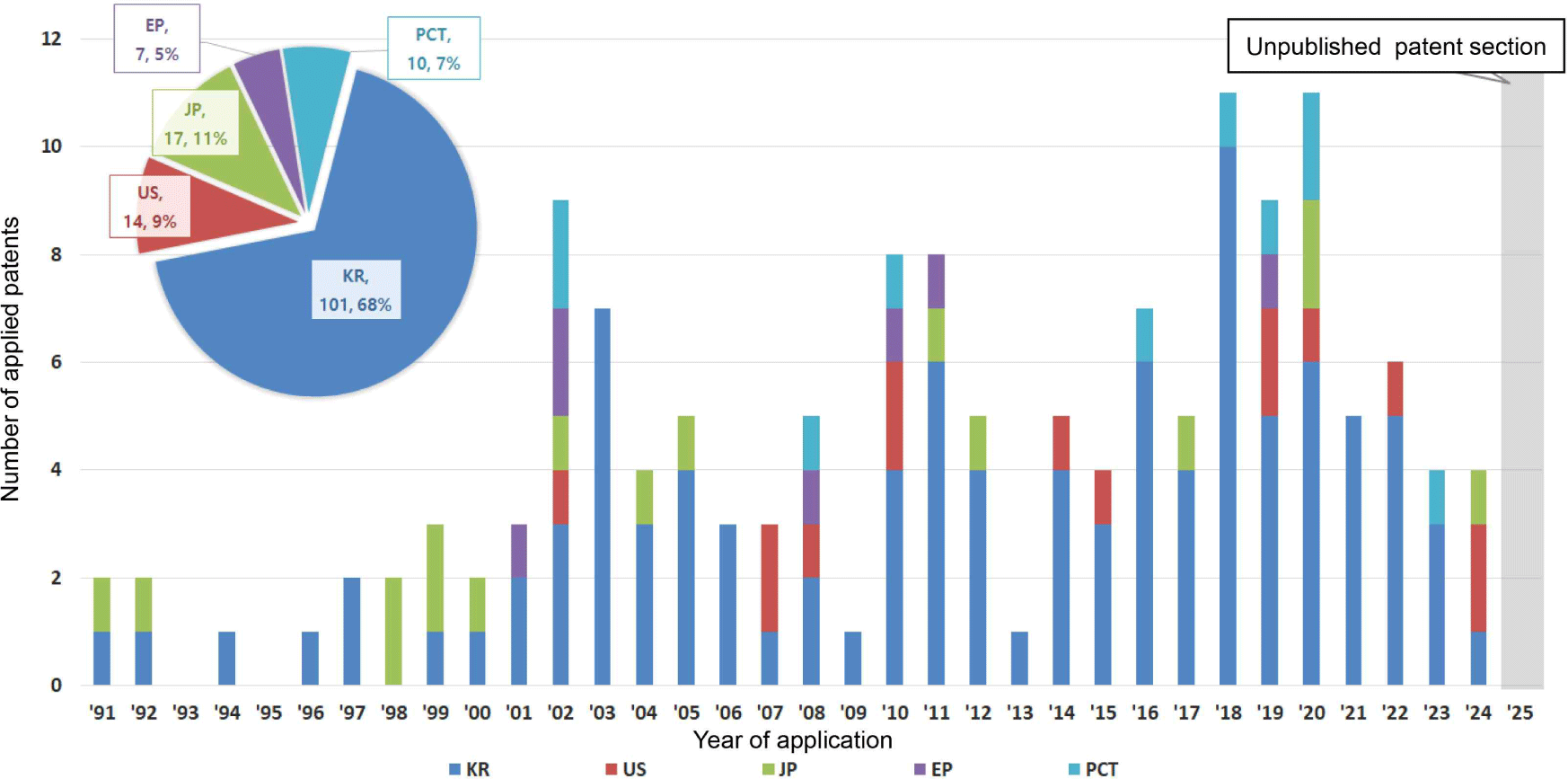
천연 보존료 관련 특허 데이터베이스 분석 결과는 Fig. 1에 나타내었다. 천연 보존료 관련 특허는 2000년대 이후 꾸준히 증가세를 보이고 있으며, 특히 한국, 일본, 미국을 중심으로 활발하게 출원되고 있다. 중국 역시 2010년대 후반부터 급격한 증가세를 나타내고 있다. 기술적 분류별로는 항균 활성 증진을 위한 혼합·효소·발효 기반 기술, 가공적성을 개선하기 위한 제형화 및 추출 효율 증진 기술, 항균 스펙트럼 확장을 위한 조합 기술 등이 주요 흐름으로 파악된다(Table 5). 출원 주체별로는 한국은 연구기관과 중소기업 중심, 일본은 Ajinomoto, Takasago 등 조미료·향료 기업, 미국은 Givaudan, General Mills 등 다국적 기업이 주도하고 있다. 중국은 출원량은 많으나 단순 조성물 특허가 다수라는 한계가 확인되었다. 이러한 결과는 현재 천연 보존료 분야가 복합처리 및 제형화 관련 특허는 산업적 적용성이 높아 향후 상용화 가능성이 클 것으로 판단된다.
Fig. 1.
Patent application status by year and country related to natural preservative material technology.
Download Original Figure
Table 5.
List of representative patents for the natural preservative material development
| No |
Country |
Status |
Category |
Subcategory |
Application No |
Title of invention |
Applicant |
| 1 |
US |
Registered |
Processability |
- |
10/493436 |
Mixture of Propionibacterium jenseniiand Lactobacillus sp. with antimicrobial activities for the use as natural preservation system |
Eidgenössische Technische Hochschule Zürich |
| 2 |
KR |
Registered |
Enhanced Antimicrobial Efficiency |
Composite Material |
10-2005-0053874 |
Natural sterilizer and method for preparing the same |
Changhae Ethanol |
| 3 |
KR |
Registered |
Enhanced Antimicrobial Efficiency |
Novel Material |
10-2006-0030619 |
Complex natural preservative |
Biospectrum |
| 4 |
KR |
Registered |
Enhanced Antimicrobial Efficiency |
Biotransformation Technology |
10-2008-0045080 |
Natural antimicrobial agent containing fermented garlic extract prepared using lactic acid bacteria |
Liisna / Korea Research Institute of Bioscience and Biotechnology |
| 5 |
KR |
Registered |
Processability |
- |
10-2010-0032677 |
Method for preparing natural antifungal material for food from Dioscoreaceae plants |
Dyne soze |
| 6 |
US |
Registered |
Enhanced Antimicrobial Efficiency |
Novel Material |
12/768529 |
Antimicrobial Compositions and Related Methods of Use |
Jeneil Biosurfactant |
| 7 |
KR |
Registered |
Enhanced Antimicrobial Efficiency |
Composite Material |
10-2011-0058425 |
Natural food preservative containing extracts of Paeonia lactiflora, Cinnamomum cassia, and Galla Rhois as active ingredients |
Dongguk University |
| 8 |
KR |
Registered |
Processability |
- |
10-2013-0164149 |
Natural food preservative containing Galla Rhois extract and its preparation method and composition |
MR Innovation |
| 9 |
KR |
Registered |
Enhanced Antimicrobial Efficiency |
Composite Material |
10-2014-0018967 |
Method for preparing fermented food preservative using green tea leaf extract and its composition |
Nambu University |
| 10 |
KR |
Registered |
Processability |
- |
10-2014-0051742 |
Method for preparing natural preservative containing Smilax china extract |
Dyne soze |
| 11 |
KR |
Registered |
Enhanced Antimicrobial Efficiency, Antimicrobial Spectrum |
Composite Material |
10-2014-0072133 |
Natural composite preservative composition containing Geranium thunbergii, Coptis chinensis, and Camellia sinensis extracts |
Morechem |
| 12 |
KR |
Registered |
Enhanced Antimicrobial Efficiency, Antimicrobial Spectrum |
Composite Material |
10-2014-0072134 |
Natural composite preservative composition containing Eun-Jeem extract, Magnolia officinalis extract, and Terminalia chebula extract |
Morechem |
| 13 |
KR |
Registered |
Processability |
- |
10-2015-0077546 |
Method for preparing natural preservative containing rosemary composition |
Dyne soze |
| 14 |
KR |
Registered |
Enhanced Antimicrobial Efficiency, Antimicrobial Spectrum |
Composite Material |
10-2015-0172558 |
Natural preservative composition containing plant extracts |
The Catholic University of Korea |
| 15 |
KR |
Registered |
Enhanced Antimicrobial Efficiency |
Composite Material |
10-2015-0187576 |
Antimicrobial composition containing citrus or grapefruit seed extract and pet hygiene formulation comprising the same |
Seoul Food R&D |
| 16 |
KR |
Registered |
Enhanced Antimicrobial Efficiency |
Novel Material |
10-2016-0034864 |
Natural food preservative composition containing Solanum nigrum extract |
Jeonnam Bioindustry Foundation |
| 17 |
KR |
Registered |
Enhanced Antimicrobial Efficiency, Antimicrobial Spectrum |
Composite Material |
10-2016-0035301 |
Complex natural preservative containing Scutellaria baicalensis extract and preparation method thereof |
Luvama Biolab |
| 18 |
KR |
Registered |
Enhanced Antimicrobial Efficiency, Antimicrobial Spectrum |
Composite Material |
10-2016-0102613 |
Natural preservative composition containing plant complex extracts |
SD Biotech |
| 19 |
KR |
Registered |
Enhanced Antimicrobial Efficiency |
Composite Material |
10-2017-0102639 |
Method for preparing natural preservative using natural rock water and mandarin concentrate |
Aribio |
| 20 |
JP |
Registered |
Processability |
- |
2017-219886 |
Natural plant-based sterilizer and method for preparing the same |
Huang Baiyuan |
| 21 |
KR |
Registered |
Enhanced Antimicrobial Efficiency |
Composite Material |
10-2018-0000211 |
Natural antimicrobial composition containing polylysine and method for applying the same to food |
Dyne soze |
| 22 |
KR |
Registered |
Enhanced Antimicrobial Efficiency |
Biotransformation Technology |
10-2018-0055222 |
Method for preparing natural antimicrobial composition containing fermented plum extract |
Kookmin University |
| 23 |
KR |
Registered |
Enhanced Antimicrobial Efficiency |
Composite Material |
10-2018-0090618 |
Natural antifungal essential oil composition for controlling xerophilic mold |
Korea University |
| 24 |
KR |
Registered |
Enhanced Antimicrobial Efficiency |
Novel Material |
10-2018-0152860 |
Natural preservative composition containing Melilotus officinalis extract |
Chungcheongnam-do Province |
| 25 |
KR |
Registered |
Enhanced Antimicrobial Efficiency |
Composite Material |
10-2018-0158276 |
Complex natural antimicrobial agent containing rosemary, cinnamon, and fatty acids and method for preparing the same |
JEYS F.I |
| 26 |
KR |
Registered |
Enhanced Antimicrobial Efficiency |
Composite Material |
10-2018-0172182 |
Antimicrobial composition containing rosemary extract and ascorbic acid derivatives as active ingredients |
Dyne soze |
| 27 |
KR |
Registered |
Antimicrobial Spectrum |
- |
10-2019-0089606 |
Natural antifungal protein composition containing rice thioredoxin-like protein as a main component |
National Institute of Ecology |
| 28 |
JP |
Registered |
Processability |
- |
2020-506286 |
Germicidal or virus-inactivating composition and method for enhancing germicidal or virus-inactivation efficacy |
Dainihon Jochugiku |
| 29 |
JP |
Registered |
Processability |
- |
2020-046775 |
Germicidal composition and method for enhancing sterilization efficacy |
Dainihon Jochugiku |
| 30 |
KR |
Registered |
Enhanced Antimicrobial Efficiency |
Composite Material |
10-2020-0109405 |
Natural antimicrobial composition |
POSCO |
| 31 |
KR |
Registered |
Enhanced Antimicrobial Efficiency |
Composite Material |
10-2022-7012973 |
Synergistic antimicrobial effect among rosemary extract, cultured dextrose, and buffered vinegar |
Kalamazoo Holdings |
| 32 |
KR |
Registered |
Enhanced Antimicrobial Efficiency |
Composite Material |
10-2020-0144244 |
Natural food preservative containing immature apple extract and highly active calcium |
Korea Food Research Institute |
| 33 |
KR |
Registered |
Enhanced Antimicrobial Efficiency |
Composite Material |
10-2021-0012062 |
Natural composite preservative containing Chamaecyparis obtusa, grapefruit seed, and germinated brown rice extracts |
Keimyung University |
| 34 |
KR |
Registered |
Processability |
- |
10-2021-0097386 |
Method for preparing natural antimicrobial agent improving shelf life |
Hannam University |
| 35 |
KR |
Registered |
Antimicrobial Spectrum |
- |
10-2021-0131725 |
Antimicrobial composition containing grapefruit seed extract as active ingredient |
Dankook University |
| 36 |
KR |
Registered |
Enhanced Antimicrobial Efficiency |
Biotransformation Technology |
10-2022-0008876 |
Method for producing green tea extract with enhanced antimicrobial and antioxidant activity, and its applications |
Korea Food Research Institute |
| 37 |
KR |
Registered |
Enhanced Antimicrobial Efficiency |
Composite Material |
10-2011-0011826 |
Antifungal composition containing plant extracts |
Sangju City |
| 38 |
US |
Pending |
Enhanced Antimicrobial Efficiency |
Novel Material, Biotransformation Technology |
17/432332 |
AN ORGANIC, NATURAL ANTIMICROBIAL PRESERVATIVE FOR MEAT PRODUCTS |
VenkataSatya Sarveswara Sairam Kuchimanchi |
| 39 |
KR |
Registered |
Enhanced Antimicrobial Efficiency |
Composite Material |
10-2020-0104078 |
Natural antimicrobial composition containing herb extracts effective against Gram-positive, Gram-negative bacteria, and fungi |
Lee Kyung-soo |
| 40 |
KR |
Pending |
Enhanced Antimicrobial Efficiency |
Composite Material |
10-2024-7024726 |
Antimicrobial natural composition |
Bio-Actives Synergeo |
| 41 |
KR |
Pending |
Enhanced Antimicrobial Efficiency |
Composite Material |
10-2022-0037291 |
Antimicrobial composition containing citrus fruit extracts as active ingredients |
Soul Nature Food |
| 42 |
KR |
Pending |
Antimicrobial Spectrum |
- |
10-2022-0184040 |
Method for preparing hybrid antimicrobial coating combining inorganic and organic antimicrobial agents and coating method using the same |
Samsang ENG |
| 43 |
KR |
Pending |
Enhanced Antimicrobial Efficiency |
Novel Plant Material |
10-2023-0105843 |
Natural food preservative using Brassica juncea (mustard leaf) and method for preparing the same |
Leeun |
| 44 |
KR |
Pending |
Enhanced Antimicrobial Efficiency |
Biotransformation Technology |
10-2023-0131837 |
Natural complex preservative for cereals or cereal products |
BST |
| 45 |
US |
Pending |
Enhanced Antimicrobial Efficiency, Processability |
Novel Material |
18/624398 |
HIGH-EFFICACY NATURAL PRESERVATIVES |
Bioveritas |
| 46 |
KR |
Pending |
Enhanced Antimicrobial Efficiency |
Composite Material |
10-2024-0151362 |
Antimicrobial functional marinade sauce and its preparation method |
Changwon National University |
Download Excel Table
따라서 천연 보존료 소재 개발은 단순히 합성 보존료의 대체 수준을 넘어, 소비자 신뢰 확보와 지속가능한 식품산업 구현이라는 측면에서 중요한 의미를 갖는다. 그러나 여전히 해결해야 할 과제도 존재하며, 원료의 생산지, 계절, 가공방법에 따라 활성 성분의 함량 변동성이 커 안정적 품질 확보가 어렵다는 점과 일부 식물 추출물은 향미 변화로 인해 소비자 기호도를 저하시킬 수 있다는 점이다. 특히 합성 보존료 대비 높은 비용 구조가 산업 적용의 장벽으로 작용한다는 점이다(Gyawali and Ibrahim, 2014). 그럼으로 향후 연구 방향은 캡슐화 및 나노에멀전 기반 제형화 기술 개발, 소재 혼합 및 복합공정 최적화, 국제적으로 통용 가능한 안전성 및 효과성 검증 시스템 마련에 집중되어야 할 것이다. 이를 통해 천연 보존료는 단순 대체재를 넘어, 새로운 부가가치를 창출할 수 있는 핵심 기술로 발전할 가능성이 크다.
합성 아질산염 대체 기술
아질산염(nitrite)은 오랫동안 육가공 산업에서 핵심적인 기능을 수행해 온 식품첨가물이다(Zhang et al., 2023). 발색 효과 측면에서 아질산염은 근육 단백질의 미오글로빈(myoglobin)과 반응하여 안정적인 적색색소인 니트로소미오글로빈(nitrosomyoglobin)을 형성함으로써 육제품의 선명한 붉은색을 부여한다(Honikel, 2008). 항균 효과로서 아질산염은 클로스트리디움 보툴리눔(Clostridium botulinum)과 같은 혐기성 세균의 성장과 독소 생성을 억제하여 식품 안전성을 확보한다(Kim et al., 2025a). 또한, 항산화 효과를 통해 지방산화를 억제함으로써 저장성과 풍미를 개선하는 기능을 갖는다(Sorour et al., 2023). 그러나 아질산염은 고온 가열(특히 130℃–180℃ 이상) 및 산성 조건에서 아민류와 반응하여 니트로소아민(nitrosamine)을 형성할 수 있으며, 이는 실제로 니트로소아민이 발생할 확률이 극히 적음에도 불구하고 소비자들이 걱정하고 있는 발암물질로 알려져 있다(Kim et al., 2025b). 이로 인해 WHO, FAO 및 각국 식품안전기관은 아질산염 사용량을 엄격히 규제하고 있으며, 소비자들 사이에서도 아질산염을 포함한 육제품 섭취에 대한 불안이 확산되고 있다. 따라서 합성 아질산염을 대체할 수 있는 천연 또는 비합성 기반 기술 개발은 식품산업에서 시급한 과제로 부상하고 있다.
합성아질산염을 생물전환 기술을 활용하여 천연 아질산염을 생성하는 기술이 개발되었다(Hwang et al., 2018). 셀러리, 시금치, 비트 등 일부 채소는 질산염(nitrate)을 다량 함유하고 있으며, 이를 Staphylococcus carnosus, Lactobacillusspp.이 환원하여 아질산염으로 전환할 수 있다(Choi et al., 2017; Jo et al., 2020; Kim et al., 2017b). 이러한 원리를 활용한 천연 발효 기반 아질산염 생성 기술은 합성 첨가물의 사용을 줄이고, ‘천연 발효 유래’라는 긍정적 소비자 이미지를 제공한다. 그러나 발효 조건에 따라 아질산염 생성량의 편차가 크고, 과도한 질산염 잔류 가능성이 있어 안전성 관리가 필요하다. 최근 연구에서는 근장단백질(myofibrillar protein)의 당화 반응(maillard reaction)을 활용하여 아질산염의 발색 효과를 대체하는 방법이 제안되었다. 당화 반응은 단백질과 당류 간의 상호작용으로 새로운 발색 화합물을 생성하며, 육제품의 색상 안정성을 높일 수 있다(Kim et al., 2022, Zhang et al., 2024). 또한 당화 단백질은 보수력(water-holding capacity)과 탄력성(texture)을 향상시켜 조직감 개선에도 기여한다(Arihara et al., 2021). 이는 아질산염 대체 효과와 동시에 품질 향상을 가능하게 하는 기술적 장점이 있다. 비열 플라즈마(non-thermal plasma) 기술은 최근 식품가공 분야에서 살균, 발색, 기능성 부여를 위한 차세대 공정으로 주목받고 있다(Jung et al., 2015). 플라즈마 처리 과정에서 생성되는 반응성 질소 및 산소종(reactive nitrogen and oxygen species)은 육제품 내 질산염·아질산염 생성을 촉진하거나 발색을 개선할 수 있다(Misra and Jo, 2017). 화학적 첨가물 없이 물리적 처리만으로 효과를 구현할 수 있다는 점에서 혁신적이지만, 산업화 단계에서는 장치 비용과 처리 균일성이 과제로 남아 있다.
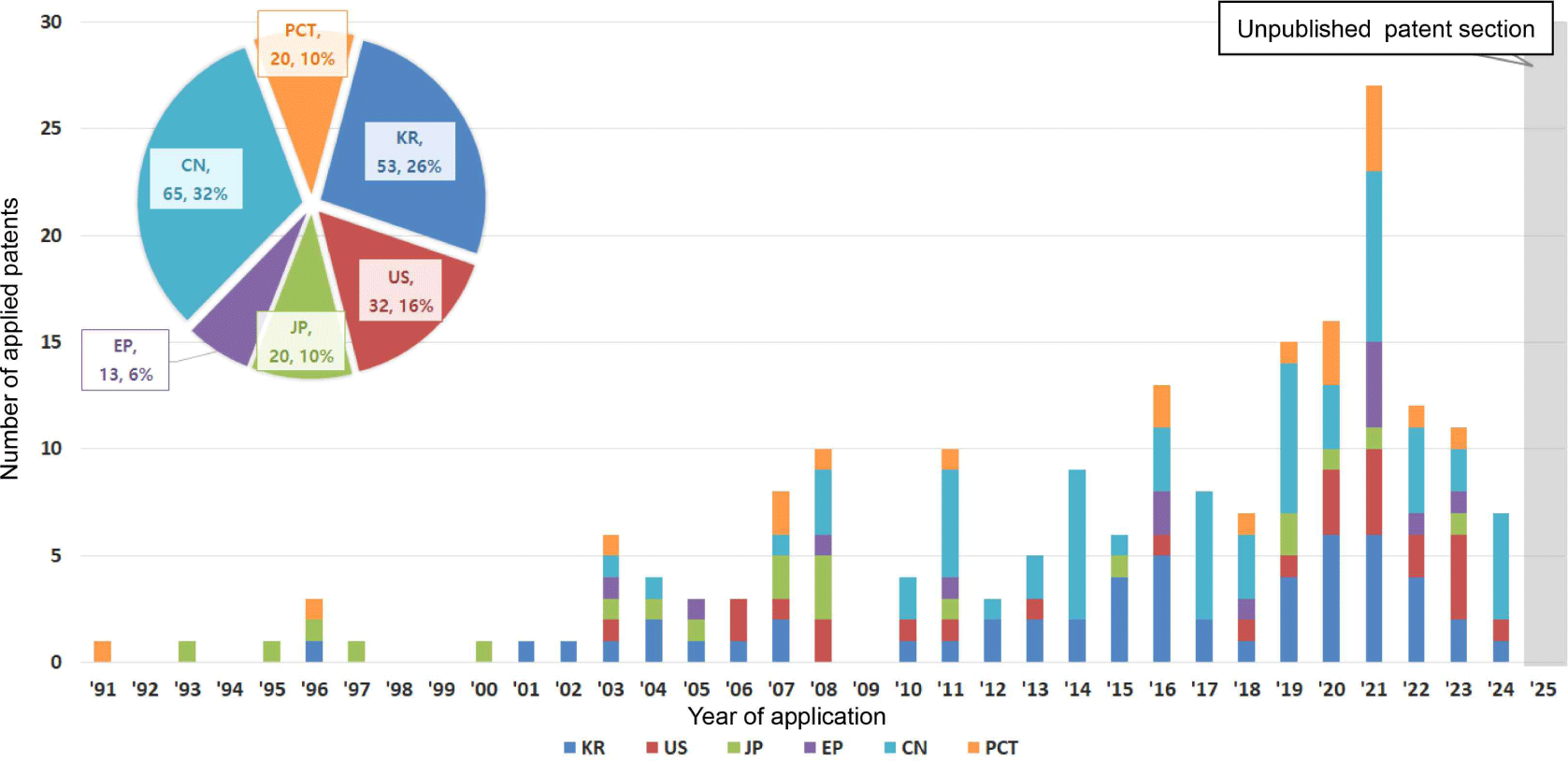
IR R&D 측면에서는 합성 아질산염 대체 기술 관련 특허는 2010년대 이후 급격히 증가하였으며, 특히 2021년에 출원 건수가 정점을 기록하였다(Fig. 2). 국가별 동향을 살펴보면, 중국과 한국이 전체 특허의 절반 이상을 차지하여 아시아권에서 연구가 활발히 진행되고 있음을 확인할 수 있다. 기술별 특허 동향을 보면, 채소 분말을 활용한 발효 기반 아질산염 생성 기술이 가장 많은 비중을 차지한다. 당화 단백질 활용은 아직 초기 단계지만 발색 및 조직감 개선을 목적으로 일부 특허가 출원되었으며, 플라즈마 기술은 출원 건수는 적으나 향후 신흥 기술로 성장할 가능성이 크다(Table 6). 합성 아질산염 대체 기술은 단순히 아질산염 사용량 감소에 국한되지 않고, 소비자 안전성과 육제품의 기호성을 동시에 확보해야 하는 복합적 과제이다. 천연 발효 기반 아질산염은 가장 현실적 대안으로 평가되지만, 균일성과 안전성 측면에서 보완이 필요하다. 근장단백질 당화와 플라즈마 기술은 혁신적 접근이지만 아직 연구개발 단계에 머물러 있으며, 산업적 적용을 위해서는 공정 최적화와 표준화가 필수적이다.
Fig. 2.
Patent application status by year and country related to to synthetic nitrite replacement technology.
Download Original Figure
Table 6.
List of representative patents related to the development of synthetic nitrite replacement technology
| No |
Country |
Status |
Subcategory |
Application No. |
Title of invention |
Applicant |
| 1 |
KR |
Registered |
Plasma treatment |
10-2014-0067665 |
Method for Producing Plasma-Treated Water with Maintained Nitrite Ion Concentration |
Korea Advanced Institute of Science and Technology (KAIST) | Seoul National University |
| 2 |
KR |
Registered |
Plasma treatment |
10-2015-0027737 |
Method for Producing Nitrite-Free Processed Meat Using Plasma-Treated Water and Meat Product Produced by the Method |
Korea Advanced Institute of Science and Technology (KAIST) | Seoul National University |
| 3 |
KR |
Expired |
Plasma treatment |
10-2015-0029641 |
Method for Treating Processed Meat Products Using Plasma and Plasma Device |
Plasmapp |
| 4 |
KR |
Registered |
Plasma treatment |
10-2017-0120438 |
Method for Generating Nitrite Ions in Plant Extracts or Pulverized Plant Materials Using Plasma |
Chungnam National University |
| 5 |
KR |
Registered |
Plasma treatment |
10-2019-0130823 |
Nitrite Substitute Containing a Mixture of Plasma-Treated Vegetables and Egg White |
Seoul National University | Chungnam National University |
| 6 |
US |
Under Examination |
Plasma treatment |
17/760550 |
System and Method for Preserving Red Meat by Plasma Active Water (PAW) Vacuum Packaging |
South China University of Technology |
| 7 |
CN |
Rejected |
Plasma treatment |
2021-10276227 |
Method for Reducing Nitrite Content in Roast Meat and Cooperatively Improving the Quality of Roast Meat |
Chinese Academy of Agricultural Sciences |
| 8 |
CN |
Withdrawn |
Glycosylated nitrosohemoglobin |
2021-10747362 |
Preparation of Glycosylated Nitrosohemoglobin and Its Application in Emulsified Sausages |
Northeast Agricultural University |
Download Excel Table
따라서 향후 연구는 발효공학·미생물학·플라즈마 공정 등 다학제적 융합 연구, 국제적으로 인정될 수 있는 안전성 검증 및 규격화, 비용 효율성 확보를 통한 산업화 기반 구축에 집중되어야 한다. 나아가 IP-R&D 전략을 통해 차별화된 특허 포트폴리오를 형성하는 것이 글로벌 경쟁력 확보에 핵심적일 것이다.
천연 조미료 소재 개발
글루탐산나트륨(MSG)은 20세기 초 일본에서 개발된 이후 전 세계적으로 가장 널리 사용된 합성 조미료로, 단백질을 구성하는 아미노산 글루탐산(glutamic acid)의 나트륨염이다(Wang and Adhikari, 2018). MSG는 강력한 감칠맛(umami)을 부여하여 다양한 가공식품에서 풍미 증진제로 활용되어 왔다. 그러나 1969년 보고된 “중국음식 증후군(Chinese restaurant syndrome)” 논란 이후, MSG가 두통, 피로, 심계항진 등의 증상을 유발할 수 있다는 주장이 소비자 사이에 확산되면서 부정적 인식이 형성되었다(Lavine, 2007). 이후 다수의 연구에서 MSG의 직접적 위해성을 뒷받침하는 과학적 근거는 제한적임이 밝혀졌음에도 불구하고, 여전히 많은 소비자들은 MSG-free 제품을 선호하고 있다. 이는 MSG 자체의 안전성보다는 합성첨가물 전반에 대한 소비자의 불신이 클린라벨 식품 수요로 이어진 결과로 해석된다(Marques et al., 2018). 이에 따라 식품산업에서는 MSG의 기능을 대체할 수 있는 천연 조미료 소재 개발이 중요한 연구 과제로 부각되고 있다.
천연 조미료 및 향미 소재는 주로 발효 기반 조미 소재, 효소 처리 단백질 가수분해물, 식물성 풍미 소재로 구분할 수 있다(Table 2). 발효는 전통적으로 풍미 증진에 활용되어 왔으며, 최근 클린라벨 연구에서도 핵심적 역할을 수행하고 있다. 대두 단백질을 발효시켜 생성된 펩타이드와 아미노산은 감칠맛을 부여하며, 일본의 간장·쇼유(soy sauce), 한국의 간장, 동남아시아의 피시소스(fish sauce) 등이 대표적인 사례이다. 또한 쌀, 보리, 다시마, 미역 등 곡물 및 해조류의 발효 과정에서 글루탐산과 핵산 관련 풍미 성분이 증가한다. 최근에는 곰팡이, 효모, 젖산균을 조합한 신규 발효 소재 개발이 활발하게 이루어지고 있으며, 다양한 풍미 프로파일을 확보하는 데 기여하고 있다(Amaliah et al., 2024). 단백질을 효소로 가수분해하면 다양한 펩타이드와 아미노산이 생성되어 풍미 증진 효과를 나타낸다. 대두 단백질 가수분해물은 글루탐산과 아스파르트산이 풍부하게 생성되어 감칠맛을 강화하며, 최근 연구에서는 어류 및 곤충 단백질 가수분해물이 지속가능한 단백질 자원으로 주목받아 식품 풍미 소재로 활용될 가능성이 검토되고 있다. 특히 발효 과정에서 미생물이 생산한 효소를 결합한 가수분해 기술은 풍미 성분의 극대화를 가능하게 하며, 클린라벨 식품 개발에 중요한 접근법으로 평가된다(Gasparre et al., 2025). 효모 추출물(Yeast extract)은 IMP, GMP 등의 뉴클레오타이드와 아미노산을 함유하여 감칠맛을 강화하며, 양파, 마늘, 토마토 등의 채소 분말 및 추출물도 천연 향미 성분을 제공하여 조미료 대체 소재로 활용 가능하다. 또한 곡물 발효 추출물에서 생성되는 몰트올(maltol) 및 퓨란류는 고소하고 단맛 나는 풍미를 부여하여 식품 제품의 기호성을 향상시킨다(Leonard et al., 2023). 천연 조미료는 저장 및 가공 과정에서 변질이나 휘발의 한계를 가지므로, 캡슐화(encapsulation) 및 이중코팅(double coating) 기술이 연구되고 있다(Garavand et al., 2021). 캡슐화는 풍미 성분을 다당류, 단백질, 지질 등의 매트릭스에 포집하여 안정성을 향상시키고, 특정 조건에서 방출되도록 설계한다. 이중코팅 기술은 수용성·지용성 코어를 이중 구조로 형성하여 단계적 풍미 방출을 가능하게 한다. 이러한 기술은 펫푸드, 인스턴트 식품, 냉동·레토르트 식품 등에서 풍미 유지 및 저장 안정성 확보에 활용되며, 쓴맛 및 잡미 마스킹 기능도 제공한다(Nedovic et al., 2011).
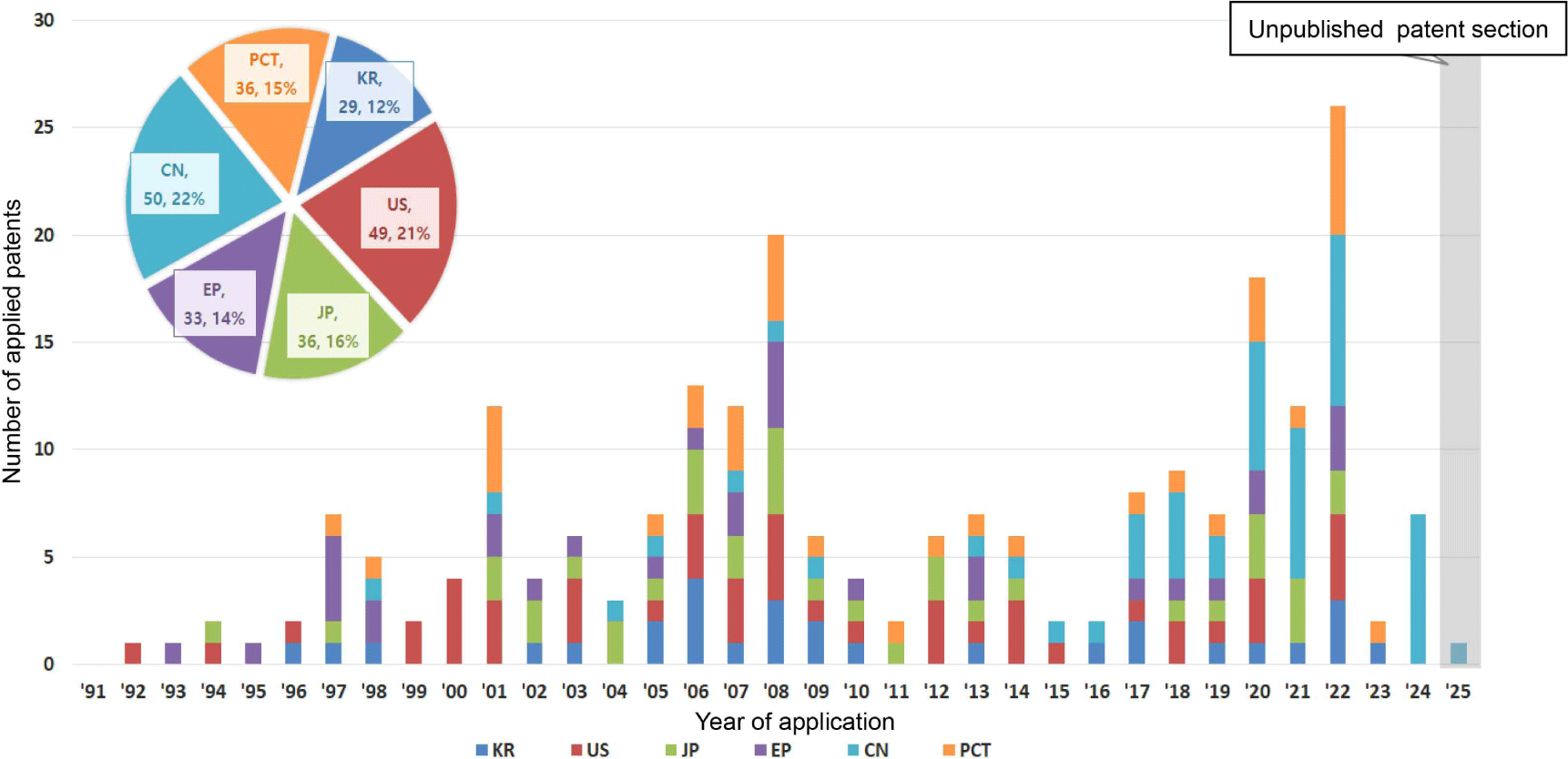
천연 조미료 및 향미 소재 관련 특허 분석 결과는 Fig. 3에 나타내었다. 천연 조미로 및 향미 소재 관련 특허들은 2000년대 중반 이후 꾸준히 증가하였으며, 2019년 이후 활발히 특허출원 되고 있다. 주요 출원국은 미국, 유럽, 일본, 한국, 중국이며, 기술 분류는 효소 처리, 캡슐화·코팅, 발효+효소 처리+캡슐화 등 복합 기술로 구분된다. 미국과 유럽의 글로벌 기업은 효소 처리와 캡슐화 기술 중심의 특허를 보유하고 있으며, 일본은 MSG 대체 및 발효 풍미 소재 관련 특허를 다수 출원하였다(Table 7). 한국에서는 한국식품연구원과 일부 기업이 효소 처리 대두 단백질 및 복합 발효 소재 관련 특허를 확보하였으며, 중국은 최근 효모 추출물 및 식물 발효 소재 관련 출원이 급증하였다(Mattos and Speziali, 2017).
Fig. 3.
Patent application status by year and country related to related to the development of natural seasoning materials technology.
Download Original Figure
Table 7.
List of representative patents related to the development of natural seasoning materials
| No |
Country |
Status |
Category |
Subcategory |
Application No. |
Title of Invention |
Applicant |
| 1 |
JP |
Withdrawn |
Enzyme Treatment Technology |
Pretreatment Technology |
1998-528429 |
Flavor Enhancer |
DSM |
| 2 |
JP |
Withdrawn |
Enzyme Treatment Technology |
Pretreatment Technology |
2002-230637 |
Health Food Produced by Reprocessing Microwave-Processed Soybeans and Okara |
Nakamura Teruo |
| 3 |
KR |
Registered |
Enzyme Treatment Technology |
Pretreatment Technology |
10-2009-0133092 |
Method for Producing Low-Molecular-Weight Soybean Peptides with Enhanced Kokumi |
Sempio |
| 4 |
KR |
Expired |
Enzyme Treatment Technology |
Pretreatment Technology |
10-2013-0027229 |
Salty Taste-Enhancing Peptide |
Nongshim |
| 5 |
CN |
Rejected |
Enzyme Treatment Technology |
Pretreatment Technology |
2017-10242303 |
Method for Removing Bitterness from Soybean Peptides Using Composite Protease |
Ronghai Biotech |
| 6 |
CN |
Withdrawn |
Enzyme Treatment Technology |
Pretreatment Technology |
2019-10280238 |
Preparation Method for Peptide-Containing Whole Coarse Cereal Powder and Its Derived Pulp, Thick Pulp, and Whole Powder |
Xia Jianwei |
| 7 |
CN |
Registered |
Enzyme Treatment Technology |
Pretreatment Technology |
2020-10931192 |
Preparation Method and Application of Stable Calcium Ion Chelation Peptide |
Jiangnan University |
| 8 |
US |
Expired |
Encapsulation / Coating Technology |
- |
09/269763 |
Embedding and Encapsulation of Controlled Release Particles |
VL Technologies | General Mills |
| 9 |
US |
Expired |
Encapsulation / Coating Technology |
- |
09/423044 |
Encapsulated Material with Controlled Release |
Institute voor Agrotechnologisch Onderzoek |
| 10 |
JP |
Withdrawn |
Encapsulation / Coating Technology |
- |
2001-063328 |
Encapsulated Substance with Controlled Release Property |
Haarmann & Reimer GmbH |
| 11 |
KR |
Rejected |
Encapsulation / Coating Technology |
- |
10-2002-0010340 |
Lipid-Soluble Antioxidant Microencapsulated with Polysaccharides and Protein Substances and Its Preparation Method |
Kooksoondang | Jang Pansik |
| 12 |
KR |
Expired |
Encapsulation / Coating Technology |
- |
10-2006-0083269 |
Method for Producing a Carrier Containing a Polymer Electrolyte Complex |
Seoul Flavor |
| 13 |
US |
Registered |
Encapsulation / Coating Technology |
- |
15/625340 |
Polysaccharide Delivery Particle |
Trucapsol |
| 14 |
JP |
Registered |
Encapsulation / Coating Technology |
- |
2019-539178 |
Dried Hydrogel Cogel |
Nestlé S.A. |
| 15 |
CN |
Registered |
Encapsulation / Coating Technology |
- |
2018-11303241 |
Slow-Release Microsphere and Protein Glycosylation Inhibitor Slow-Release System, Preparation, and Application |
Jiangxi Academy of Agricultural Sciences |
| 16 |
US |
Registered |
Encapsulation / Coating Technology |
- |
18/021552 |
Three-Layer Fruit or Vegetable Preservative Film with Temperature-Controlled Release Under Mechanical Driving Power and Preparation Method Thereof |
Jiangsu University |
| 17 |
KR |
Registered |
Encapsulation / Coating Technology |
- |
10-2022-0153038 |
Method for Producing Chitosan-Based Microcapsules for Sustained Release and Enhanced Absorption of Low-Molecular Collagen |
Yonsei University | Nutrex Technology |
| 18 |
KR |
Registered |
Encapsulation / Coating Technology |
- |
10-2023-0034028 |
Temperature-Sensitive Gelatin–Alginate Hybrid Composition and Microcapsules Containing the Same |
Yonsei University |
| 19 |
CN |
Registered |
Encapsulation / Coating Technology |
- |
2024-10477676 |
Hydroxypropylmethylcellulose Film-Forming Composition and Its Application |
Shandong Healsee Capsule |
Download Excel Table
천연 조미료 및 향미 소재 개발은 단순한 합성 MSG 대체를 넘어, 소비자 기호성과 클린라벨 시장 확대라는 두 가지 목표를 동시에 충족해야 한다. 연구 동향을 살펴보면, 전통적 발효 소재뿐만 아니라 곤충 단백질, 미세조류, 신규 발효 미생물 등 지속가능한 자원의 활용이 증가하고 있다. 산업적 측면에서는 캡슐화·이중코팅 기술을 활용하여 풍미 안정성과 저장성을 확보하고 있으며, 향후 연구로는 원료 변동성 관리, 비용 효율성 확보, 풍미의 다양성과 안정성 확보가 포함되어야 할 것으로 사료된다. 또한 이러한 과제 해결을 위해 발효공학, 효소공학, 제형화 기술의 융합형 연구가 필수적이며, 이는 향후 클린라벨 식품 산업의 경쟁력 확보에 중요한 역할을 할 것으로 기대가 된다.
특허 기반 intellectual property-R&D 전략
본 연구에서는 클린라벨 가공기술의 특허 동향을 분석하고자 유효특허를 분석하였고, 이를 토대로 IP-R&D 전략의 필요성과 방향성을 제시하고자 하였다. 식품산업은 오랫동안 경험적 기술과 제조 노하우에 기반하여 성장해왔으나, 최근 클린라벨 트렌드 확산과 글로벌 경쟁 심화로 인해 지식재산권(IP)의 중요성이 크게 부각되고 있다(Park, 2022). 단순히 연구개발(R&D) 성과를 확보하는 것만으로는 시장 경쟁력을 담보하기 어려우며, 특허 분석을 기반으로 연구 방향을 설정하는 IP-R&D 접근이 필수적이다. 특허 출원 추세를 분석한 결과, 클린라벨 기술 분야는 주요 영역에서 뚜렷한 성장을 나타내었다. 천연 보존료 소재는 2000년대 이후 지속적으로 증가하였으며, 특히 한국과 일본에서 복합소재 및 제형화 관련 특허가 활발히 출원되었다. 합성 아질산염 대체 기술은 2010년대 후반 이후 급격한 증가세를 보였는데, 중국과 한국이 발효·환원 기반 기술을 중심으로 선도하고 있으며, 플라즈마 처리 기술은 신흥 영역으로 주목받고 있다. 천연 조미료 및 향미 소재 분야는 2019년 이후 글로벌 기업을 중심으로 효소 처리 및 캡슐화 기술 관련 특허가 급격히 늘어나고 있다. 이러한 결과는 클린라벨 기술이 단순 소재 발굴에서 나아가 제형화, 복합공정, 안정화 기술로 확장되고 있음을 시사한다. 출원 주체별로 살펴보면, 한국은 CJ 제일제당, 한국식품연구원, 일부 중소기업이 주요 출원 기관으로 확인되었으며, 일본은 Ajinomoto, Takasago 등이 발효 및 향미 기술 중심으로 활발히 특허를 보유하고 있다. 미국과 유럽은 Givaudan, General Mills와 같은 다국적 기업이 대규모 IP 포트폴리오를 형성하여 글로벌 시장을 선점하고 있으며, 중국은 최근 다수의 조성물 특허를 확보했으나 기술 성숙도 측면에서는 여전히 검증 단계에 머물러 있다. 이는 한국 식품산업이 아직 글로벌 선도 기업과의 격차를 좁혀야 할 필요성이 크다는 점을 보여준다.
특허 분석 결과, 천연 보존료의 복합 처리 기술이나 아질산염 대체를 위한 플라즈마 공정 특허는 핵심 특허는 아니지만, 산업적 확장 가능성이 높아 향후 연구개발의 seed 기술로 활용될 수 있다. 그럼으로 현재 시점에서 한국 식품산업은 이러한 준핵심 특허를 적극적으로 활용해 새로운 IP 포트폴리오를 구축하는 전략이 필요하다. IP-R&D 전략적 측면에서 볼 때, 권리 회피 전략(freedom-to-operate)이 요구된다. 이미 특정 추출 용매나 미생물 균주에 대한 특허가 존재하는 경우는 이를 회피하기 위해 대체 추출 방식이나 신규 균주를 활용하는 연구 설계가 필요하다. 기술 포트폴리오 다각화가 중요하고, 단일 특허만으로는 기술 보호 효과가 제한적이므로 소재 개발, 공정 기술, 제형화, 응용 분야까지 아우르는 권리망을 구축해야 장기적인 경쟁력을 확보할 수 있다. 또한, 글로벌 특허 환경 대응이 필수적으로 클린라벨 시장이 글로벌 차원에서 확대되고 있는 만큼, 한국 내 특허만으로는 한계가 있으며 주요 수출국에 대한 동시 출원 전략과 함께 다국적 기업의 IP 장벽을 피해 새로운 니치(niche) 영역을 발굴해야 한다. 그럼으로 클린라벨 가공기술에서 특허 기반 R&D 전략은 특허 분석을 통해 연구개발의 방향성을 확보하고 시장성과 경쟁 수준을 사전에 평가할 수 있다. 권리 회피 전략을 통해 상용화 과정에서 법적 분쟁 가능성을 최소화할 수 있고, 글로벌 특허 확보를 통해 국내 기업이 다국적 기업과 경쟁할 수 있는 기반을 마련할 수 있다. IP-R&D 전략은 기업 단위의 성과를 넘어 국가 차원의 기술 경쟁력 제고와 식품산업 생태계 발전에도 기여할 수 있다.
따라서 클린라벨 가공기술 분야에서 IP-R&D는 선택적 요소가 아니라, 필수적 요소로 자리매김하고 있다. 한국 식품산업은 연구자·기업·정부가 협력하여 특허 기반의 혁신 생태계를 조성함으로써, 글로벌 시장에서 지속 가능한 경쟁력을 확보해야 할 것이다.
향후 연구 및 산업적 전망
본 연구에서는 클린라벨 가공기술의 최신 연구 동향과 산업적 적용 가능성을 고찰하고자 하였다. 클린라벨은 단순히 합성첨가물을 제거하는 차원을 넘어서 소비자가 신뢰할 수 있는 자연 기반의 기능적 대체 기술 개발을 핵심 목표로 하고 있다. 특히, 이러한 기술적 발전은 식품과학 단일 분야의 연구만으로는 한계가 있으며, 다양한 학문 간의 융합적 접근이 필요함을 확인하였다. 발효공학과 미생물학의 융합은 클린라벨 기술에서 가장 활발히 연구되는 분야로서, 미생물 발효를 통해 천연 아질산염을 생성하거나 항균 물질을 생산하는 기술은 육가공품의 저장성과 안전성을 동시에 확보할 수 있다. 또한 특정 균주의 활용은 풍미 증진에도 기여할 수 있어서 합성 향미 증진제를 대체할 수 있는 가능성을 제시하였다. 나노기술과 제형공학은 천연 보존료 및 향미 성분의 안정성을 높이는 데 중요한 역할을 하는 것으로 조사되었다. 천연물은 일반적으로 불안정성과 휘발성이 높은 단점이 있으나, 나노 캡슐화(encapsulation) 기술을 활용할 경우 제어 방출(controlled release) 및 저장 안정성을 확보할 수 있다. 이는 합성 보존료와 비교하여 경제적 부담이 크다는 한계를 극복할 수 있는 방향성을 제시하였다. 플라즈마 및 비열(non-thermal) 가공 기술은 살균, 발색, 기능성 부여와 같은 물리적 처리 대안으로 주목받고 있다. 기존의 합성 아질산염이 담당하던 발색과 항균 기능을 플라즈마 공정으로 대체할 수 있다는 연구 결과는 클린라벨 기술 상용화의 중요한 돌파구가 될 수 있다. 시스템 생물학과 오믹스 기술의 접목은 복합 발효 과정에서 생성되는 다양한 대사산물을 규명하고 최적화하는 데 기여할 수 있다. 이를 통해 기능성 소재의 대량 발굴이 가능하며 클린라벨 가공기술을 과학적으로 정립할 수 있는 기반을 마련할 수 있다.
그러나 현재 클린라벨 산업의 가장 큰 문제점은 국제적으로 합의된 정의와 표준의 부재이다. 미국과 유럽은 자율 규제와 라벨링 가이드라인을 통해 간접적으로 관리하고 있으나, 국가 간 규정 불일치는 국제 무역에서 시장 진입 장벽으로 작용할 수 있다. 따라서 CODEX Alimentarius와 같은 국제 표준화 기구를 중심으로 통일된 규정 마련이 시급하며, 한국 역시 이를 연계한 클린라벨 인증제도를 구축할 필요가 있다. 산업적 측면에서 클린라벨 가공기술의 상용화 확대를 위해서는 연구실 수준의 효능 검증을 넘어 대량생산 및 공정 최적화를 통해 실제 식품 제조에 적용 가능한 기술 확보가 필요하다. 또한, 천연소재의 높은 비용 문제를 해결하기 위해 원료 공급망 안정화와 공정 효율화가 필수적이다. 또한 글로벌 시장 진출 전략 역시 중요하다. 한국 기업은 내수 시장에 한정되지 않고 아시아 및 세계 시장을 목표로 제품 포트폴리오를 확장해야 하며, 이를 위해 주요 수출국의 규제 환경을 지속적으로 모니터링하여 대응 전략을 수립할 필요가 있다. 클린라벨 식품산업에서의 특허분석을 통한 연구방향을 도출하고자 하였으며, 소비자 감각 특성을 반영한 기호성 연구, 저장성 및 안전성에 대한 장기 모니터링, 곤충 단백질, 미세조류, 식품 부산물 등 지속가능한 원료 다변화, 지식재산권(IP) 기반의 혁신 생태계 조성 등이 제시될 수 있다. 그럼으로 다각적 연구와 산업적 노력이 결합되어 클린라벨 가공기술은 단순한 식품 트렌드가 아니라 지속가능하고 투명한 미래 식품산업의 핵심 동력으로 자리매김할 것이다.
결 론
클린라벨 가공기술은 식품 산업의 패러다임 전환을 이끄는 핵심 분야로 자리매김하고 있다. 본 연구에서는 클린라벨 가공기술의 최근 동향과 적용 가능성을 종합적으로 고찰하고자 한다. 특히 식품 보존료, 아질산염 대체 소재, 천연 조미료 개발은 소비자 안전성과 저장성 확보, 기호성 유지라는 세 가지 핵심 과제를 동시에 달성해야 함을 확인하였다. 그러나 아직까지 상용화 과정에서의 원가 부담, 첨가물 대체 시 발생하는 품질 저하, 국제적 인증 기준의 부재 등 해결해야 할 난제가 존재하고 있다. 향후 연구는 미생물학·발효공학·나노기술·플라즈마 공정을 융합한 다학제적 접근을 통해 새로운 기능성 소재를 발굴하고, 국제 표준화를 통해 클린라벨 인증제도의 글로벌 기준을 마련하며, 특허 기반 R&D 전략과 IP 포트폴리오 구축을 통해 산업 경쟁력을 강화하는 방향으로 확장될 필요가 있다. 결론적으로, 클린라벨 가공기술은 단순한 첨가물 대체를 넘어 지속가능성과 신뢰성을 동시에 담보하는 미래 식품산업의 핵심 패러다임으로 자리매김할 것으로 사료된다.

 PDF Download
 PubReader
 Export Citation
 Email the Author
 Share Facebook
 Share Twitter
 Cited by 0 Article
 Metrics (View:5,750)