
Food and Life
Korean Society for Food Science of Animal Resources
Review Article

Brief overview of valorization of meat industry byproducts: Opportunities and challenges in food waste management

Sana Kausar1,https://orcid.org/0009-0005-2011-7411, Abdul Samad2,https://orcid.org/0000-0002-4724-3363, Ayesha Muazzam2https://orcid.org/0000-0002-5155-6629, AMM Nurul Alam2https://orcid.org/0000-0003-3153-3718, Young-Hwa Hwang3https://orcid.org/0000-0003-3687-3535, Seon-Tea Joo2,3,*https://orcid.org/0000-0002-5483-2828
1Department of Biological Sciences, College of Natural Sciences, Kongju National University, Gongju 32588, Korea
2Division of Applied Life Science (BK 21 Four), Gyeongsang National University, Jinju 52828, Korea
3Institute of Agriculture & Life Science, Gyeongsang National University, Jinju 52828, Korea

† These authors contributed equally to this work.

*Corresponding author : Seon-Tea Joo. Division of Applied Life Science (BK 21 Four), Gyeongsang National University, Jinju 52828, Korea. Tel: +82-55-772-1943, Fax: +82-55-772-1943, E-mail: stjoo@gnu.ac.kr

© Copyright 2026 Korean Society for Food Science of Animal Resources. This is an Open-Access article distributed under the terms of the Creative Commons Attribution Non-Commercial License (http://creativecommons.org/licenses/by-nc/4.0/) which permits unrestricted non-commercial use, distribution, and reproduction in any medium, provided the original work is properly cited.

Received: Jun 02, 2025; Revised: Jun 09, 2025; Accepted: Jun 09, 2025

Published Online: Mar 31, 2026

Abstract

The meat industry produces significant byproducts during processing, including blood, bones, skin, fat, and offal, which have traditionally been treated as waste. These byproducts contain valuable nutrients and bioactive compounds, presenting substantial opportunities for valorization into value-added products. Valorizing meat byproducts mitigates environmental pollution, reduces waste, and promotes resource efficiency and economic sustainability. Growing concerns about food security, climate change, and resource scarcity further highlight the urgency of efficient resource utilization. Valorizing meat byproducts adds economic value and aligns with global sustainability and zero-waste goals. This review presents an in-depth analysis of the composition of meat byproducts, explores innovative technological approaches for their conversion, and evaluates their environmental and economic impacts. Furthermore, this review also discusses the regulatory, consumer, and logistical challenges this sector faces. Advances in biotechnology, green processing, and circular bioeconomic principles are discussed in the context of overcoming these barriers. This review emphasizes the need for integrated strategies involving policy, research, and industry collaboration to fully realize the potential of meat byproduct valorization in sustainable food systems.

Keywords: meat byproducts; valorization; bioactive compounds; economic sustainability; regulatory challenges

Introduction

Meat is an essential component of the human diet (Hwang et al., 2025; Samad et al., 2024b). The global meat industry plays a critical role in food security, serving as a significant source of high-quality protein for billions of people (Wu et al., 2014). Now the world is producing 350 million tons of meat every year (Our World in Data, 2023) while the demand for meat is increasing with increasing population (Samad et al., 2025) and rising incomes, particularly in low- and middle-income countries (FAO, 2022). This surge in demand underscores the importance of maintaining a resilient and sustainable meat supply chain (Caccialanza et al., 2023). However, meat production involves more than just the generation of edible muscle tissue; it also involves the production of byproducts in considerable amounts, which can be used for many purposes (Gagaoua et al., 2024). It is estimated that 35%–40% of the live weight of slaughtered animals comprises byproducts such as blood, bones, skin, fat, and offal (Edgewood Locker, 2019). Further breakdown of meat byproducts is explained in Table 1.

Table 1. Classification and composition of major meat industry byproducts
Byproduct % of live weight Key components Potential applications
Blood 3%–5% Hemoglobin, plasma proteins, iron Nutraceuticals, emulsifiers, animal feed
Bones 10%–15% Collagen, calcium, phosphorus Gelatin, bone meal, biomedical uses
Skin 7%–10% Type I collagen, elastin Cosmetics, gelatin, peptides
Fat 15%–20% Triglycerides, fatty acids Biofuels, soap, animal feed
Offal 10%–20% Vitamins, minerals, high-quality proteins Pharmaceuticals, feed, direct human consumption
Download Excel Table

Usually, these animal derivatives are considered cheap waste or used in less industrial processes (Irshad and Sharma, 2015). When managed improperly, they can make a remarkable contribution to environmental damage, such as the release of greenhouse gas, contamination of water and soil, and offensive smells (Singh and Rashid, 2017). Given the environmental scrutiny surrounding animal farming, improving waste management in the meat manufacturing sector has become an urgent priority (Fairr, 2019). Concerning these issues, world sustainability goals like the United Nations (sustainable development goals, SDGs) have highlighted the importance of decreasing food loss and supporting the use of circular resources (UNDP, 2015). One potential strategy for attaining these goals is valorizing meat industry residuals, which refers to converting waste animal byproducts into valuable products using physical, chemical, and biomanufacturing approaches. This strategy reduces the environmental impact and provides new financial opportunities in feed, food, therapeutic, and bio-based energy sectors.

Modern trends have indicated the ability of meat byproducts as the origin of functional protein, enzymes, gelatin, several bioactive products, eco-friendly plastics, and even bio-based diesel (Álvarez-Castillo et al., 2021). Furthermore, biochemical hydrolysis of livestock processing wastes can produce protein-hydrolyzed compounds with antioxidant and antimicrobial characteristics appropriate for nutritional supplements and other functional foods (Hartoyo et al., 2022). Similarly, skins and bones are progressively transforming into gelatin and the drug manufacturing industry (Rather et al., 2022). Simultaneously, blood plasma is combined with ground meat emulsions to refine appearance and water-holding ability (Jin and Choi, 2021).

Despite these opportunities, several issues prevent the large- scale use of valorization approaches. These comprise technical barriers, increased manufacturing and distribution costs, the consumer perspective of by-products-based ingredients, and changing regulatory policies in different regions (Henchion, 2018). To promote sustainable advancements in the meat industry, it is essential to have a comprehensive understanding of the various types of by-products generated, the available processing methods, their environmental and commercial benefits, and the challenges associated with their utilization.

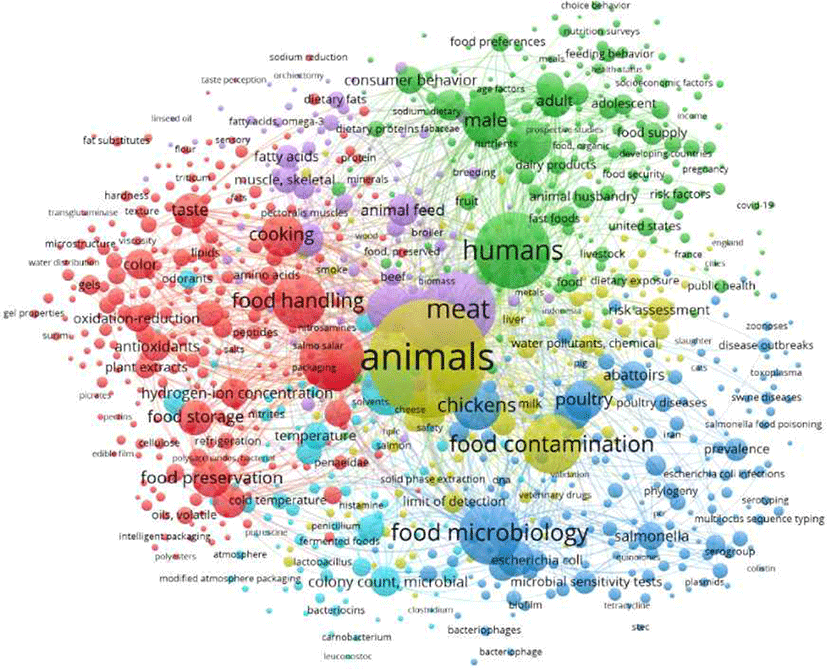
The valorization of meat byproducts is highly important, so several research studies have been done on the valorization of meat byproducts in the last 10 years, as shown in Fig. 1. This is generated from literature published over the past ten years on by-products in the meat industry. This review thoroughly analyzes the present condition and future abilities of the valorization of meat by-products. It examines the categorization and formation of by-products, points out available and emerging processing technologies, demonstrates the environmental and economic applications, and emphasizes the significant challenges and policy assessments.
fl-2026-1-1-g1
Fig. 1. Keyword co-occurrence network which is generated from literature published over the past ten years on by products of meat industry.
Download Original Figure

Types of Meat Industry Byproducts and Their Composition

The residuals produced during meat processing can be generally categorized based on their structure and composition. A detailed understanding of them is necessary to identify the appropriate transformation pathway.

Blood

Blood comprises about 3%–5% of the live animal’s weight and contains proteins (about 17% dry matter), hemoglobin, iron, and biofunctional peptides (Hsieh and Ofori, 2011). It is often used in animal feed or processed to obtain plasma proteins utilized as emulsification and binding compounds (Samad et al., 2024a) in the food sector. However, increased spoilage risk demands fast processing or preserving techniques such as drying and aggregation.

Bones

Bones mainly consist of collagen fibers integrated in the mineral framework of calcium, phosphorus, and hydroxyapatite (Hong et al., 2022). About 10%–15% of an animal’s live weight consists of bones (Britannica, 2025). Gelatin and collagen extracted from bones are extensively used in cosmetics, food, therapeutic, and biomedical applications because of their biological suitability and functional characteristics (Jana et al., 2024). In addition, bone mineral powder is used as a nutritional supplement.

Skin and cartilage

Cartilage and skin, full of elastin and collagen type I, signify another high-value stream (Ferraro et al., 2016). Their collagen content is utilized to create glycosylated collagen (Gómez-Guillén et al., 2011), gelatin, and biologically active peptides that support health, skin, and the functions of joints (Zdzieblik et al., 2021). In tissue-based engineering, these primary ingredients can be used as biomaterials (Zhai et al., 2025). Bovine gelatin is a byproduct from the meat processing industry and can be used for fabricating nanofibers using electrospinning techniques. Furthermore, incorporation of polyphenolic extracts like green tea into Gelatin based fiber fibers can significantly improve their functionality in meat packaging and preservation (Alam et al., 2025).

Fat and grease

Animals comprise about 15%–20% of residual products. They are a valuable source of lipids for the production of biofuels (Hřebečková et al., 2025), manufacturing of soap (Uduma et al., 2025), and food compositions (Zhang et al., 2025). Fat can be processed and purified into rendered fat, which can also be used in pet nutrition and industrial uses.

Internal organs (offal)

Offal organs are the liver, lungs, kidneys, and other internal organs. Some internal organs are directly used in human foods, but the central portion is transformed into animal feed and refined for pharmaceutical applications (Abdel-baky et al., 2020). On a nutritional basis, internal organs are full of vitamins, minerals, and high-quality proteins.

Valorization Pathways and Technological Innovations

Recent advances in processing techniques have enlarged the ability to transform meat by-products into valuable products, supporting environmental sustainability and the growth of the economy (Limeneh et al., 2022).

Protein and bioactive peptide extraction

Enzyme-based hydrolysis strategies facilitated the transformation of blood and internal organ proteins into biologically active peptides, demonstrating antioxidants, anti-hypertension, and microbe-inhibiting properties (de Castro et al., 2015). For example, protease-based hydrolysis of porcine-derived blood (Kim, 2022) produces peptides with effective Angiotensin- Converting Enzyme (ACE) inhibition potential that help manage hypertension. Fermentation using particular microbe-derived strains has also been analyzed to refine nutritional profiles and develop bioactive ingredients.

Collagen and gelatin production

Conventional acid or alkali-based hydrolysis approaches for the extraction of collagen from skin and bones have been refined by combining enzyme-based treatments and unique green solvents (e.g., deep eutectic solvents) to increase production and purification while decreasing environmental impacts (Bisht et al., 2021). Gelatin from meat residuals is widely used as a thickening agent and in Coating techniques within the food and medical organizations (Rather et al., 2022).

Biofuel generation

The growing focus on sustainable energy has increased interest in transforming animal fats into bio-based diesel through trans-esterification (Yadav et al., 2025). In this process, triglycerides are changed into fatty acid methyl esters, which can replace petroleum diesel (Almutairi et al., 2025). Studies demonstrate that biodiesel derived from animal fats shows comparable engine efficiency with less emissions (Santos et al., 2015).

Animal feed production

Meat byproducts such as blood and bone meals are traditionally processed into protein-rich animal feed, particularly for aquaculture and livestock (Woodgate et al., 2022). Advances in drying and pelletizing technologies have improved nutrient retention and feed safety, expanding market opportunities.

Emerging Green Technologies

Emerging valorization strategies leverage biotechnology and green chemistry (Sheldon, 2024). For example, microbial fermentation of byproduct hydrolysates produces single-cell proteins and enzymes with applications in food and industrial sectors (Bajić et al., 2022). Additionally, supercritical fluid extraction offers a solvent-free method to recover lipids and bioactives efficiently (da Silva et al., 2016). Further technologies for the processing of meat products are explained in Table 2.

Table 2. Overview of valorization technologies and their application
Technology Target byproduct(s) Products obtained Industrial applications
Enzymatic hydrolysis Blood, Offal Bioactive peptides Functional foods, nutraceuticals
Collagen extraction Skin, Bones Gelatin, collagen peptides Food, pharma, cosmetics
Transesterification Animal Fats Biodiesel Energy, industrial fuels
Fermentation Protein hydrolysates Single-cell proteins, enzymes Feed, biotech industry
Supercritical fluid extraction Fat, Skin Bioactives, oils Cosmetics, food supplements
Download Excel Table

Environmental and Economic Benefits

Transforming the meat industry’s residuals provides valuable environmental benefits:

Waste minimization

Redirecting byproducts from landfills reduces methane emissions, soil contamination, and water pollution (Okpaga et al., 2024). This practice supports climate change mitigation efforts by lowering the carbon footprint of meat production. Moreover, it fosters the development of eco-friendly industries through the sustainable reuse of organic waste.

Resource efficiency

Maximizing the use of animal resources decreases pressure on land and water resources (Agricorn, 2023). It enhances overall production efficiency by utilizing inputs more effectively across the supply chain. Additionally, it contributes to food system resilience by diversifying the range of usable animal-derived products.

Greenhouse gas mitigation

Utilizing fats for biofuels reduces reliance on fossil fuels, contributing to lower carbon emissions (Patel et al., 2025). This sustainable approach supports cleaner energy transitions and reduces the environmental footprint of the meat industry. Furthermore, the environmental benefits of meat byproduct valorization are discussed in Table 3.

Table 3. Environmental benefits of meat byproduct valorization
Benefit Description Measurable impact
Waste reduction Diverts waste from landfills ↓ Methane emissions
GHG emissions mitigation Replaces fossil fuels with biodiesel ↓ CO2 & NOx emissions
Resource efficiency Maximizes use of slaughtered animals ↓ Pressure on land and water use
Pollution control Reduces leaching of contaminants ↓ Water and soil contamination
Download Excel Table

In an economic context, this transformation generates new income sources for meat processors and decreases the cost of waste management. Gaining collagen from skin and bones leads to a billion-dollar global industry run by consumer demand from cosmetics, food, and therapeutic industries.

Challenges in meat byproduct valorization

Despite technological advancements, several factors restrict their adoption globally.

Regulatory and safety issues

Food safety policies regulating products based on ingredients are strict and change with the area. Ensuring pathogen eradication, toxin removal, and association with standards is expensive and complicated (Alahi and Mukhopadhyay, 2017). In addition, environmental policies restrict emissions and waste discharge during manufacturing.

Consumer acceptance

Negative opinions about the by-products are usually linked with low quality, influencing consumer consent to accept these (Lavranou et al., 2023). To overcome these challenges, consumer education about safety and benefits is necessary.

Technical and logistical limitations

Diversity in the composition of products, seasonal patterns, and spoilage risk poses challenges for consistent processing and supply chain management (Zhu et al., 2022). Innovative preservation and logistics facilities are necessary, particularly in developing countries.

Economic constraints

High expenses for advanced manufacturing equipment and changing market prices of transformed products raise financial challenges for manufacturers (Aspevik et al., 2017). Government-industry collaborations and subsidies may be more important in increasing investment.

Regulatory and market considerations

Globally, policy systems vary in their strategy for using meat by-products. In Europe, strict policies regulate the utilization of animal by-products to avoid risks such as transmissible spongiform encephalopathies (EU, 2024). The U.S. Food and Drug Administration (FDA) in the USA similarly regulates the use of meat byproducts in food and feed applications. Market demand for sustainable and functional ingredients is growing, with consumers increasingly seeking eco-friendly products (Global Information, 2025). Valorized meat byproduct ingredients, especially collagen peptides and bioactive proteins, have gained traction in nutraceuticals and functional foods markets, signaling positive growth prospects. Furthermore, the regulatory framework in different regions is explained in Table 4.

Table 4. Regulatory frameworks in different regions
Region Key regulatory body Restrictions / focus area
EU EFSA, EC TSE risk, strict processing standards
USA FDA, USDA Food and feed safety, labeling
Asia Varies Often less restrictive, growing regulation
Global (Codex) FAO/WHO Codex Alimentarius International harmonization of standards
Download Excel Table

Future prospects

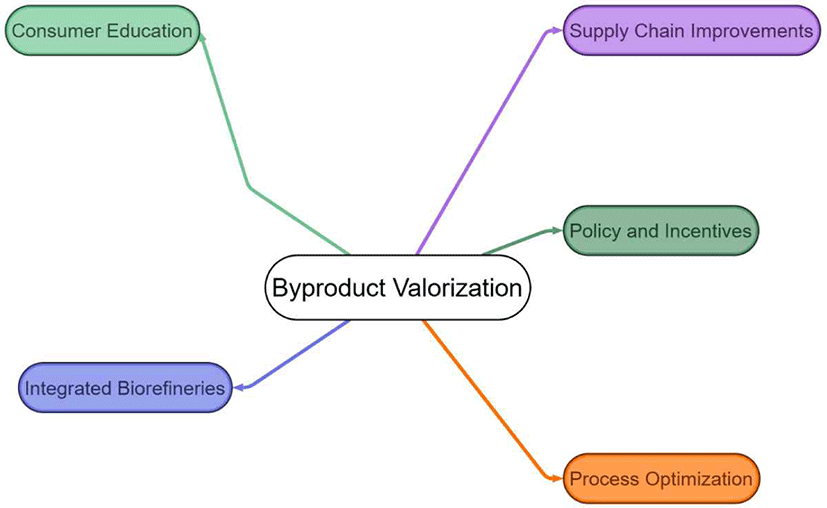
As shown in Fig. 2, byproduct valorization depends on a few factors. These factors need to be addressed to improve prospects. Furthermore, these factors are briefly explained below.
fl-2026-1-1-g2
Fig. 2. Factors require improvement for byproduct valorization.
Download Original Figure
Process optimization

Research on low-cost, environmentally friendly extraction and conversion methods to improve the economic viability of byproduct utilization. These innovations aim to reduce processing costs while maintaining the quality and safety of the end products.

Integrated bio refineries

Developing facilities that process multiple byproduct streams into diversified product portfolios enhances resource efficiency and market adaptability. Such integrated systems support scalable operations and reduce overall production waste.

Policy and incentives

Crafting supportive regulatory policies and financial incentives to encourage valorization investments in byproduct valorization. These measures help reduce market entry barriers and stimulate innovation within the sustainable meat processing sector.

Consumer education

Transparent communication about the safety, sustainability, and benefits of valorized products. Collaboration across academia, industry, and government agencies will accelerate innovation and adoption.

Supply chain improvements

Strengthening cold chain logistics and storage to ensure byproduct quality and safety of meat byproducts. Improved infrastructure minimizes spoilage and extends the shelf life, enabling broader utilization and market reach.

Conclusion

Meat industry byproducts represent a vast and underutilized resource that, if effectively valorized, can significantly enhance sustainability and economic resilience within the food sector. This review concludes that valorizing the meat industry byproducts is crucial for advancing environmental sustainability, economic resilience, and circular bioeconomic goals. The meat sector can reduce waste, minimize environmental harm, and unlock new economic opportunities by converting these residual materials into valuable proteins, bioactives, fuels, and functional ingredients. Technological advancements have unlocked numerous pathways to convert these byproducts into valuable proteins, bioactive compounds, biofuels, and functional ingredients. Overcoming regulation, consumer perception, and cost challenges will require integrated, multidisciplinary approaches. Valorization aligns with circular economy principles and global sustainability goals, underscoring its strategic importance in the future of food systems.

Conflicts of Interest

The authors declare no potential conflict of interest.

Acknowledgments

This study is supported by the National Research Foundation of Korea (NRF) under a grant funded by the Korean government (MSIT) (2023R1A2C1004867).

Ethics Approval

This article does not require IRB/IACUC approval because there are no human and animal participants.

Author Contributions

Conceptualization: Kausar S, Samad A, Joo ST.

Data curation: Kausar S, Samad A.

Methodology: Samad A, Muazzam A, Alam AMMN.

Software: Muazzam A, Alam AMMN.

Validation: Hwang YH, Joo ST.

Investigation: Kausar S, Samad A.

Writing-original draft: Kausar S, Samad A.

Writing-review & editing: Kausar S, Samad A, Muazzam A, Alam AMMN, Hwang YH, Joo ST.

References

1.

Abdel-baky A, Abou-hashima A, Ashraf E, Hamdy M, Helmy A. 2020. Pharmaceutical uses of animal byproducts. Available from:. Accessed at Apr 30, 2025.

2.

Agricorn. 2023. Chapter 8 - Resource use efficiency | Unit - 5 | Farming System and Sustainable Agriculture. Available from: https://www.agricorn.in/2023/03/resource-use-effciency-and-optimization-techniques.html. Accessed at May 15, 2025.

3.

Alahi ME, Mukhopadhyay SC. 2017. Detection methodologies for pathogen and toxins: A review. Sensors 17:1885.

4.

Alam AMMN, Hwang YH, Samad A, Joo ST. 2025. Meat quality traits using gelatin–green tea extract hybrid electrospun nanofiber active packaging. Foods 14:1734.

5.

Almutairi SM, Aldossery SF, Jamshidbek K, Rahmonovich AI, Demirpolat A, Labor K, Pathania S. 2025. Catalytic fatty acid methyl esters (FAMEs) synthesis using lepidium aucheri seed oil and its antibacterial potential. Catal Lett 155:26.

6.

Álvarez-Castillo E, Felix M, Bengoechea C, Guerrero A. 2021. Proteins from agri-food industrial biowastes or co-products and their applications as green materials. Foods 10:981.

7.

Aspevik T, Oterhals Å, Rønning SB, Altintzoglou T, Wubshet SG, Gildberg A, Afseth NK, Whitaker RD, Lindberg D. 2017. Valorization of proteins from co- and by-products from the fish and meat industry. Lin CSK (ed). In Chemistry and Chemical Technologies in Waste Valorization, Springer, Cham, Switzerland. pp. 123-150.

8.

Bajić B, Vučurović D, Vasić Ð, Jevtić-Mučibabić R, Dodić S. 2022. Biotechnological production of sustainable microbial proteins from agro-industrial residues and by-products. Foods 12:107.

9.

Bisht M, Martins M, Dias ACRV, Ventura SPM, Coutinho JAP. 2021. Uncovering the potential of aqueous solutions of deep eutectic solvents on the extraction and purification of collagen type I from Atlantic codfish (Gadus morhua). Green Chem 23:8940-8948.

10.

Britannica. 2025. Chemical composition and physical properties in bone. Available from: https://www.britannica.com/science/bone-anatomy/Chemical-composition-and-physical-properties. Accessed at May 15, 2025.

11.

Caccialanza A, Cerrato D, Galli D. 2023. Sustainability practices and challenges in the meat supply chain: A systematic literature review. Br Food J 125:4470-4497.

12.

da Silva RP, Rocha-Santos TAP, Duarte AC. 2016. Supercritical fluid extraction of bioactive compounds. TrAC Trends Anal Chem 76:40-51.

13.

de Castro RJS, Sato HH. 2015. Biologically active peptides: Processes for their generation, purification and identification and applications as natural additives in the food and pharmaceutical industries. Food Res Int 74:185-198.

14.

Edgewood Locker. 2019. How much eating meat will I get? Available from: https://edgewoodlocker.com/proc/how-much-meat-are-we-getting/. Accessed at May 02, 2025.

15.

European Union [EU]. 2024. Commission Regulation (EU) 2024/887 of 22 March 2024 amending Annexes IV, VIII and IX to Regulation (EC) No 999/2001 of the European Parliament and of the Council as regards animal feeding, placing on the market and importation into the Union. Available from: https://eur-lex.europa.eu/eli/reg/2024/887/oj/eng. Accessed at May 15, 2025.

16.

Fairr. 2019. Managing environmental risks in meat and dairy supply chains. Available from: https://www.fairr.org/resources/reports/managing-environmental-risks-in-meat-and-dairy-supply-chains Accessed at May 12, 2025.

17.

Ferraro V, Anton M, Santé-Lhoutellier V. 2016. The “sisters” α-helices of collagen, elastin and keratin recovered from animal by-products: Functionality, bioactivity and trends of application. Trends Food Sci Technol 51:65-75.

18.

Food and Agriculture Organization of the United Nations [FAO]. 2022. Meat market review: Emerging trends and outlook 2022. Available from: https://openknowledge.fao.org/server/api/core/bitstreams/5a64d0d4-880f-4f61-8827-edf2f5d735ce/content. Accessed at May 02, 2025.

19.

Gagaoua M, Das AK, Fu Y, Dib AL, Nanda PK. 2024. Meat by-products as a source of bioactive peptides and functional ingredients: Regulatory and safety barriers to valorization. Curr Opin Green Sustain Chem 47:100910.

20.

Global Information. 2025. Global sustainable ingredients market, 2025–2032. In Upcycled ingredients market size, share analysis, growth trends and forecast 2025-2032. Available from: https://www.datamintelligence.com/research-report/upcycled-ingredients-market. Accessed at May 15, 2025.

21.

Gómez-Guillén MC, Giménez B, López-Caballero MA, Montero MP. 2011. Functional and bioactive properties of collagen and gelatin from alternative sources: A review. Food Hydrocoll 25:1813-1827.

22.

Hartoyo B, Widyastuti T, Rahayu S, Santosa RSS. 2022. Study of protein hydrolysis and peptide antioxidants activity of chicken slaughterhouse waste and its potential for feed additives. Anim Prod 24:97-103.

23.

Henchion M. 2018. Facilitators and barriers for foods containing meat co-products. Teagasc. Available from: https://teagasc.ie/wp-content/uploads/uploads/media/website/publications/2018/5-BioOPPs-April-2018-Maeve-Henchion.pdf. Accessed at May 12, 2025.

24.

Hong MH, Lee JH, Jung HS, Shin H, Shin H. 2022. Biomineralization of bone tissue: Calcium phosphate-based inorganics in collagen fibrillar organic matrices. Biomater Res 26:42.

25.

Hřebečková T, Hrčka M, Hanč A. 2025. Handling residual animal fats by vermicomposting with continuous feeding. Biomass Convers Biorefin 2025:20935-20948.

26.

Hsieh YH, Ofori JA. 2011. Blood-derived products for human consumption. Revel Sci 1:14-21.

27.

Hwang YH, Samad A, Muazzam A, Alam AM, Joo ST. 2025. A comprehensive review of (AI)-driven approaches to meat quality and safety. Food Sci Anim Resour 45: 998-1013.

28.

Irshad A, Sharma BD. 2015. Abattoir by-product utilization for sustainable meat industry: A review. J Anim Prod Adv 5:681-696.

29.

Jana S, Das P, Ghosh PR, Nandi SK. 2024. Collagen and gelatin from fish processing by-products for biomedical applications. In Maqsood S, Naseer MN, Benjakul S, Zaidi AA (eds). Fish Waste to Valuable Products. Springer, Singapore, Singapore. pp 91-117.

30.

Jin S, Choi J. 2021. Effects of porcine blood plasma on the emulsion stability, physicochemical characteristics and textural attributes of emulsified pork batter. J Anim Sci Technol 63:170-179.

31.

Kim S. 2022. A multi-omics approach to assess production of the valuable peptides and amino acids in porcine blood protein hydrolysate. LWT-Food Sci Technol 163:113593.

32.

Lavranou G, Henchion M, McCarthy MB, O’Reilly SJ. 2023. Valorizing meat by-products for human consumption: Understanding consumer attitude formation processes. Front Anim Sci 4:1129241.

33.

Limeneh DY, Tesfaye T, Ayele M, Husien NM, Ferede E, Haile A, Mengie W, Abuhay A, Gelebo GG, Gibril M, Kong F. 2022. A comprehensive review on utilization of slaughterhouse by-product: Current status and prospect. Sustainability 14:6469.

34.

Okpaga FO, Adeolu AI, Nwalo FN, Okpe AO, Ikpeama CC, Ogwu CE. 2024. Safeguarding ecosystems using innovative approaches to manage animal wastes. Bio-Research 22:2274-2291.

35.

Patel GCM, BS A, Jagadish, Shettigar AK, Samuel OD. 2025. Introduction to renewable energy resources and sustainable feedstocks for biodiesel. In Biofuel Production, Performance, and Emission Optimization. Springer, Cham, Switzerland. pp 1-21.

36.

Rather JA, Akhter N, Ashraf QS, Mir SA, Makroo HA, Majid D, Barba FJ, Khaneghah AM, Dar BN. 2022. A comprehensive review on gelatin: Understanding impact of the sources, extraction methods, and modifications on potential packaging applications. Food Packag Shelf Life 34:100945.

37.

Samad A, Alam AN, Kumari S, Hossain MJ, Lee EY, Hwang YH, Joo ST. 2024a. Modern concepts of restructured meat production and market opportunities. Food Sci Anim Resour 44:284-298.

38.

Samad A, Kim SH, Kim CJ, Lee EY, Kumari S, Hossain MJ, Alam AMMN, Muazzam A, Bilal U, Hwang YH, Joo ST. 2024b. Revolutionizing cell-based protein: Innovations, market dynamics, and prospects in the cultivated meat industry. J Agric Food Res 18:101345.

39.

Samad A, Kim SH, Kim CJ, Lee EY, Kumari S, Hossain MJ, Alam AMMN, Muazzam A, Hwang YH, Joo ST. 2025. From farms to labs: The new trend of sustainable meat alternatives. Food Sci Anim Resour 45:13-30.

40.

Santos BS, Capareda SC. 2015. A comparative study on the engine performance and exhaust emissions of biodiesel from various vegetable oils and animal fat. J Sustain Bioenergy Syst 5:89-103.

41.

Sheldon RA. 2024. Waste valorization in a sustainable bio‐based economy: The road to carbon neutrality. Chem Eur J 30:e202402207.

42.

Singh A, Rashid M. 2017. Impact of animal waste on environment, its managemental strategies and treatment protocols to reduce environmental contamination. Vet Sci Res J 8(1-2):1-12.

43.

Uduma UA, Orverem ST, Uduma MB. 2025. Production and physicochemical analysis of toilet soap from blended oils. FUDMA J Sci 9:335-339.

44.

United Nations Development Programme [UNDP]. 2015. What are the sustainable development goals? Available from: https://www.undp.org/sustainable-development-goals. Accessed at May 12, 2025

45.

Woodgate SL, Wan AH, Hartnett F, Wilkinson RG, Davies SJ. 2022. The utilisation of European processed animal proteins as safe, sustainable and circular ingredients for global aquafeeds. Rev Aquac 14:1572-1596.

46.

Wu G, Fanzo J, Miller DD, Pingali P, Post M, Steiner JL, Thalacker-Mercer AE. 2014. Production and supply of high-quality food protein for human consumption: Sustainability, challenges, and innovations. Ann N Y Acad Sci 1321:1-19.

47.

Yadav P, Jagtap M, Karande P. 2025. Characterization of animal fat-based biodiesel fuel in the Indian context for optimized sustainable production and management. Sustain Chem Clim Act 2025:100082.

48.

Zdzieblik D, Brame J, Oesser S, Gollhofer A, König D. 2021. The influence of specific bioactive collagen peptides on knee joint discomfort in young physically active adults: A randomized controlled trial. Nutrients 13:523.

49.

Zhai X, Geng X, Li W, Cui H, Wang Y, Qin S. 2025. Comprehensive review on application progress of marine collagen cross-linking modification in bone repairs. Mar Drugs 23:151.

50.

Zhang J, Zhang M, Chen K, Deng D. 2025. Improvement strategies for fats and oils used in future food processing based on health orientation and sustainability: Research progress, challenges and solutions. Crit Rev Food Sci Nutr 65:47-63.

51.

Zhu Y, Wang W, Li M, Zhang J, Ji L, Zhao Z, Zhang R, Cai D, Chen L. 2022. Microbial diversity of meat products under spoilage and its controlling approaches. Front Nutr 9:1078201.